


AI Career Resilience 2026: Essential Skills to Future-Proof Your Profession
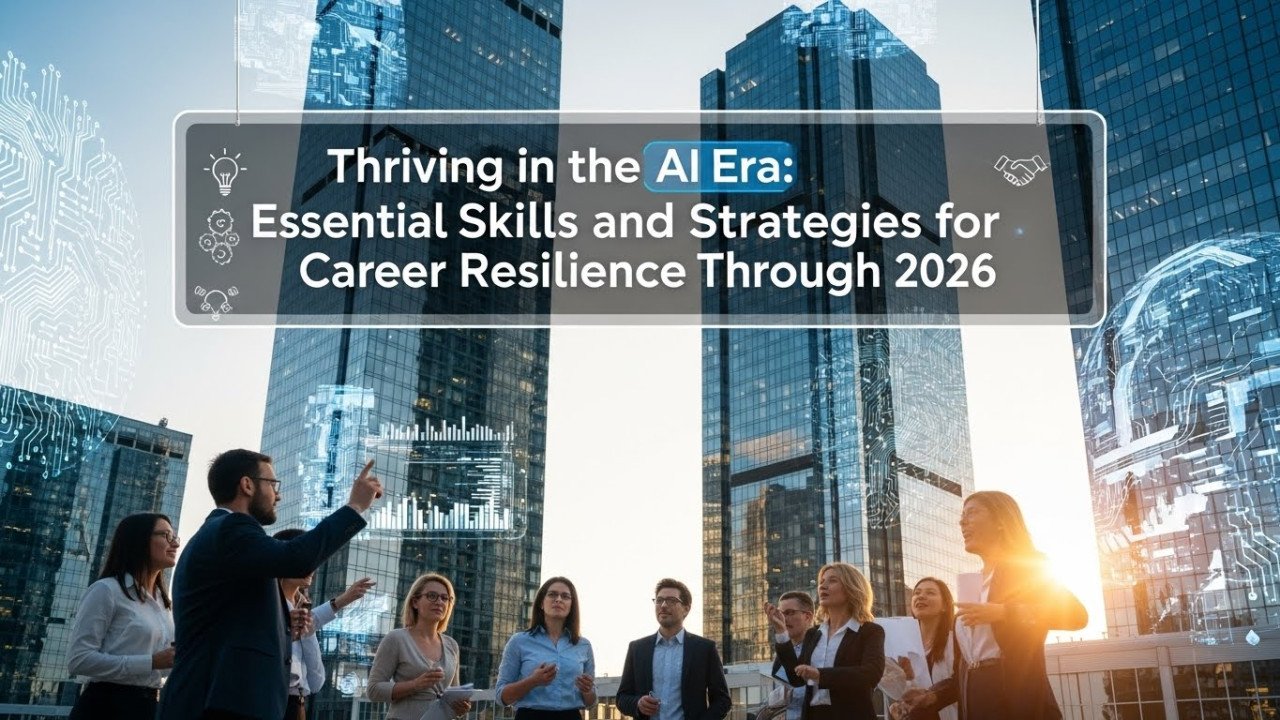
Thriving in the AI Era: Essential Skills and Strategies for Career Resilience Through 2026
The workplace is undergoing a seismic transformation as artificial intelligence continues to reshape job markets, professional expectations, and career trajectories. Rather than viewing AI as an existential threat to employment, forward-thinking professionals and organizations are recognizing it as a catalyst for fundamental skill evolution and new opportunities. The key to sustained career success in 2026 and beyond lies not in competing with machines but in developing the distinctly human capabilities that complement AI's analytical prowess—a strategic shift that requires both technical literacy and investment in uniquely human competencies.
The Evolving Job Market: Displacement, Transformation, and Emergence
Understanding AI's Impact on Employment
Artificial intelligence is reshaping the employment landscape in three concurrent ways: automating certain roles, transforming the nature of existing jobs, and creating entirely new career categories that barely existed a decade ago. The World Economic Forum predicts that approximately 60% of the global workforce will require significant upskilling by 2030, a staggering figure that underscores the magnitude of change ahead. However, this statistic should not inspire panic but rather strategic preparation—research indicates that while AI will eliminate some positions, particularly those involving routine, predictable, or highly structured tasks, it simultaneously creates demand for roles requiring human judgment, creativity, and emotional intelligence.
The most vulnerable positions tend to concentrate in data-heavy fields where machines excel: routine accounting processes, data entry, basic coding tasks, and straightforward analytical work. Conversely, roles emphasizing human-centered skills—healthcare providers, educators, negotiators, creatives, and strategic leaders—demonstrate greater resilience because they combine technical expertise with irreplaceable human qualities like empathy, complex judgment, and authentic relationship-building. Organizations are already reflecting this shift through hiring patterns; demand for AI fluency skills jumped nearly sevenfold between mid-2023 and mid-2025, while entry-level programmer positions facing particular automation vulnerability show slowing hiring growth.
Emerging Career Pathways in the AI Economy
The acceleration of AI adoption is generating entirely new professional categories previously unimaginable. Roles such as prompt engineer, AI trainer, AI workflow designer, automation ethicist, human-in-the-loop validator, and agent product manager are transitioning from niche specialties to mainstream career opportunities with competitive salaries and clear advancement paths. The prompt engineering field exemplifies this emergence, with average compensation around $63,000 annually and projections suggesting substantial growth as organizations systematize their AI implementation strategies.
These new positions share common characteristics: they require understanding both technological capabilities and human-centric outcomes, demand continuous learning as tools and methodologies evolve rapidly, and emphasize the judgment required to apply AI ethically and effectively. Prompt engineers, despite not requiring traditional coding expertise, must develop clear communication skills, creative problem-solving abilities, and the discipline to test and refine iteratively. Similarly, roles like AI evaluation writers, who assess whether AI-generated outputs meet organizational standards, exemplify hybrid positions that blend technical literacy with human oversight.
Critical Skills for the AI Era: Building Career Resilience
AI Literacy and Prompt Engineering Mastery
Among all emerging competencies, AI literacy—the ability to understand AI capabilities, limitations, and appropriate applications—has become foundational across industries. This extends beyond casual familiarity to genuine fluency: understanding how large language models operate, recognizing their strengths and failure modes, and knowing when AI adds value versus when human judgment is irreplaceable. Organizations are recognizing that widespread AI literacy creates organizational agility; when employees across departments understand what AI can accomplish, they identify opportunities for intelligent augmentation that pure technologists might overlook.
Prompt engineering represents a particular dimension of AI literacy with direct career impact. The skill involves more than casual instruction-writing; effective prompt engineers master multiple prompt architectures—instruction-based, role-based, step-by-step reasoning, multi-task workflows, and evaluation-focused prompts—each suited to different outcomes. The discipline fundamentally rests on clear communication, curiosity about AI behavior, and adaptability to continuous tool evolution. What distinguishes exceptional practitioners is their ability to craft prompts that extract specific, verifiable outputs rather than generic responses, a capability that requires sustained practice and systems thinking.
The career opportunity is particularly compelling in 2026 because few professionals yet possess genuine mastery; the skill gap between casual users and proficient practitioners creates substantial market differentiation. Early career entrants developing deep prompt engineering expertise position themselves advantageously for the next five to ten years of technology evolution, as this foundational AI competency will likely remain valuable as AI systems mature and specialize. Organizations urgently need individuals who can design intelligent workflows, optimize AI-human collaboration, and train teams to use generative systems effectively—precisely the work skilled prompt engineers perform.
Data Literacy: Interpreting and Acting on Intelligence
As AI systems generate exponentially expanding volumes of insights, performance metrics, and recommendations, data literacy—the capacity to understand, interpret, and draw meaningful inferences from data—has transitioned from specialized expertise to fundamental professional requirement. Data literacy empowers professionals across all functions to ask sophisticated questions of data, identify patterns relevant to their domains, and make evidence-informed decisions rather than depending entirely on analysts or AI systems to interpret findings.
The importance of data literacy extends across industries and organizational levels. Marketing strategists interpreting content performance across channels, healthcare administrators analyzing patient outcome trends, customer service leaders identifying support patterns, and financial professionals forecasting cash flows all benefit from the ability to engage directly with data rather than relying exclusively on pre-generated reports or AI interpretations. McKinsey research demonstrates that organizations establishing data literacy across their workforce make more intelligent decisions about AI implementation itself—they understand the data feeding their models, recognize quality issues before they cascade into biased outcomes, and ask more penetrating questions about whether AI recommendations make strategic sense.
Building data literacy doesn't require statistical or coding expertise; it fundamentally demands curiosity, clear thinking, and comfort with quantitative concepts. Professional development in this area typically focuses on practical skills: reading visualizations accurately, understanding data quality and completeness, asking clarifying questions about metrics, and connecting data insights to strategic business objectives. The World Economic Forum identifies data-related capabilities as among the skills experiencing fastest growth in demand, creating opportunities for professionals who invest in this dimension of their development.
Strategic Prompt Mastery and AI Workflow Optimization
Beyond basic prompt engineering, strategic prompt mastery—the ability to design multi-step AI workflows, optimize prompt performance iteratively, and evaluate AI output quality critically—represents an emerging premium skillset. This capacity combines technical execution with strategic thinking: recognizing high-impact opportunities where AI collaboration dramatically improves outcomes, designing workflows that meaningfully distribute work between human judgment and machine capabilities, and implementing feedback loops that continuously improve system performance.
Organizations deploying AI most effectively recognize that success rarely comes from simply automating existing processes; instead, transformational value emerges from reimagining workflows entirely around machine capabilities. Customer service teams don't merely replace human representatives with chatbots; they redesign service delivery so AI handles routine inquiries instantly, human agents focus exclusively on complex issues requiring judgment and empathy, and knowledge systems continuously improve through interactions. Supply chain managers don't simply ask AI to forecast demand; they design decision frameworks where AI provides predictive insights, humans apply contextual business judgment, and the combination produces superior inventory strategies.
This workflow optimization capability demands both technical proficiency and organizational systems thinking—understanding how processes interconnect, recognizing where AI can add asymmetric value, and implementing governance ensuring human oversight of AI recommendations in sensitive domains. McKinsey analysis indicates that organizations approaching AI implementation as workflow redesign rather than task automation capture 2-3 times greater value than those simply automating existing processes.
Critical Thinking and Intelligent AI Evaluation
As critical thinking—the capacity to question, analyze, and evaluate information rigorously—becomes scarcer among workers increasingly dependent on AI for preliminary analysis, its value has paradoxically increased. The risk emerges when professionals accept AI-generated insights uncritically because they either trust the technology implicitly or lack confidence in their own analytical capabilities. Research indicates that workers with lower task confidence delegate more to AI, reducing their own critical evaluation, while those with higher subject matter expertise maintain more sophisticated questioning.
Critical thinking in the AI era requires reframing how professionals approach their work. Rather than generating outputs entirely independently, increasing numbers of knowledge workers invest effort in evaluating, refining, and integrating AI-generated content into their final work products. This shift represents not laziness but practical adaptation—recognizing that AI excels at initial drafting, research synthesis, and pattern identification, while human expertise and judgment add irreplaceable refinement. The critical capability lies in approaching AI outputs with informed skepticism, recognizing where outputs might be incomplete, biased, or contextually inappropriate, and synthesizing machine-generated insights with human wisdom.
Developing rigorous critical thinking for AI collaboration means cultivating several specific practices: asking clarifying questions about how AI reached its conclusions, verifying important claims against independent sources, considering what information might be missing from AI analysis, and maintaining awareness of AI's known limitation areas. Organizations supporting this capability through training, time allocation, and cultural expectation-setting achieve superior outcomes because employees maintain the questioning mindset that prevents over-reliance on imperfect tools.
The Human Advantage: Soft Skills in Ascendance
Creativity as Competitive Differentiation
While artificial intelligence excels at analysis, pattern matching, and optimization within defined parameters, human creativity—the capacity to imagine novel solutions, make unexpected connections, and generate genuinely original ideas—remains distinctly difficult for machines to replicate. The World Economic Forum identifies creative thinking among the most in-demand professional capabilities, with research confirming that over 70% of employers prioritize creative thinking highly for future workforce needs. This represents a remarkable reversal: in previous decades, routine and analytical capabilities commanded premium compensation; increasingly, the premium attaches to creative and imaginative work.
The competitive advantage emerges because AI increasingly commoditizes routine creativity—content writing, design templates, basic marketing copy—while genuine strategic creativity remains valuable. Organizations thrive by redirecting human creativity toward high-leverage applications: designing novel business models, identifying previously unconsidered market opportunities, solving complex customer problems that don't fit existing categories, and innovating faster than competitors. Research demonstrates that companies fostering robust creativity cultures outperform peers substantially; 58% of organizations encouraging employee creativity achieved revenue growth exceeding 10% annually, compared to just 20% of companies with weak creativity cultures.
The opportunity for individual professionals lies in deliberately developing creative muscles rather than assuming creativity is innate talent. Actionable development strategies include pursuing cross-functional projects exposing individuals to diverse perspectives, studying how leaders in other industries solve similar problems, allocating dedicated time for brainstorming and exploration, and practicing reframing problems in multiple ways before rushing to solutions. This deliberate creativity development becomes increasingly valuable as AI automates more routine work and organizations compete increasingly on innovation rather than execution excellence.
Emotional Intelligence: Leading Through Change and Ambiguity
Emotional intelligence—comprising self-awareness, self-regulation, empathy, motivation, and social skill—has transitioned from peripheral soft skill to central leadership competency in the AI era. Research demonstrates that 80% of organizations most advanced in AI implementation rated themselves as "strongly emotionally intelligent," compared to just 16% among less mature AI organizations. This correlation reflects a fundamental reality: implementing transformative technologies requires guiding people through uncertainty, addressing legitimate anxiety about job security and capability adequacy, and building trust sufficient for employees to genuinely adopt new ways of working.
Emotionally intelligent leaders excel at navigating the human dimensions of AI transformation specifically. They anticipate how changes will affect different employee populations, validating concerns while helping teams focus on aspects within their control. They participate actively in their teams' work by establishing meaningful goals, fostering psychological safety where experimentation and failure are learning opportunities, and providing feedback that empowers rather than demoralizes. They model cooperation through genuine listening, collaborative problem-solving, and skillful conflict resolution—precisely the capabilities absent from AI systems.
For individual contributors, emotional intelligence proves equally valuable. Professionals with strong interpersonal skills, self-awareness regarding their AI collaboration patterns, and capacity for genuine empathy in team environments become trusted collaborators whom others want to partner with for complex projects. They navigate the anxiety that accompanies rapid technological change better than colleagues, demonstrating resilience and modeling adaptability that calms organizational systems. Organizations increasingly recognize that while AI handles cognitive tasks efficiently, the emotional and relational dimensions of knowledge work remain entirely human—and critically important for organizational culture, retention, and performance.
Communication, Collaboration, and Cross-Functional Teamwork
The ability to communicate clearly across technical and non-technical audiences—translating complex AI concepts into accessible language, explaining technical possibilities to business stakeholders, and helping diverse teams understand shared objectives—has become increasingly valuable as organizations integrate AI into operations. Similarly, collaboration and cross-functional teamwork skills prove essential because AI implementation success rarely resides within single departments; rather, it requires coordinated effort across technology, operations, human resources, customer experience, and front-line roles.
These communication and collaboration competencies develop through deliberate practice and exposure to diverse perspectives. Professionals who volunteer for cross-functional projects, practice explaining technical concepts in simple language, seek feedback on their communication effectiveness, and deliberately cultivate relationships across organizational boundaries build these capabilities systematically. The career advantage emerges because professionals excelling at cross-functional collaboration become invaluable nodes in organizational networks—they understand how different functions think, bridge divides when conflicts arise, and can coordinate complex initiatives requiring diverse expertise.
Strategic Approaches to Career Adaptation
Conducting Personal Skills Gap Analysis and Development Planning
Rather than pursuing development reactively, forward-thinking professionals conduct systematic personal assessment of their current capabilities against emerging market demands. Effective gap analysis articulates three time horizons: immediate priorities requiring attention within 90 days, medium-term development spanning 6-12 months, and longer-term strategic direction across 2-3 years. Within each timeframe, professionals evaluate both technical capabilities (AI tools, data platforms, AI-related skills germane to their industry) and human-centered competencies (creativity, critical thinking, emotional intelligence, communication).
A concrete framework for gap analysis involves researching job postings in target roles, identifying recurring skill requirements, assessing current capability in those domains, and developing targeted learning plans. This evidence-based approach replaces vague resolutions with specific, verifiable development targets. For instance, a marketing professional might recognize that prompt engineering, content performance analytics, and customer psychology emerge repeatedly in job descriptions for desired senior roles, leading to targeted development in those specific capabilities.
Organizations increasingly support this personal development planning through formal channels: skills assessments identifying gaps objectively, personalized learning recommendations adapting to individual learning styles, and career pathing conversations with managers exploring how developing specific capabilities strengthens advancement prospects. The most progressive employers implement AI-powered learning platforms that analyze job market trends, identify emerging skills gaps across their workforce, and recommend targeted micro-credentials and courses. This organizational investment in workforce development creates mutual benefit: employees gain capabilities advancing their careers while employers build more resilient, adaptable teams prepared for future challenges.
Continuous Learning and Micro-Credentials as Career Insurance
The pace of AI evolution ensures that static skill sets provide diminishing career protection; instead, continuous learning and adaptability become essential professional practices. Rather than pursuing comprehensive degree programs—which, while valuable, require substantial time commitment—many professionals use stacked micro-credentials: discrete, rapidly-available training addressing specific skills in shorter timeframes.
The economics of micro-credentials work particularly well for AI-era skill development. A prompt engineering certificate, data analytics specialization, or AI ethics micro-credential requires weeks rather than years to complete, provides verifiable credentials relevant to immediate job market demands, and can be stacked progressively to build comprehensive capabilities. Platforms like Coursera, edX, and specialized training providers now offer AI-focused learning pathways designed for busy professionals, accessible through evening study or part-time enrollment. Critically, organizations increasingly recognize these micro-credentials as legitimate qualification indicators, valuing demonstrated competency equivalent to formal degree credentials in specific technical domains.
Building Hybrid Technical and Business Acumen
The highest-value professionals in the AI era combine technical literacy with business strategy understanding—they grasp AI capabilities deeply enough to recognize when applications create genuine business value rather than pursuing technology for its own sake. This hybrid capability doesn't require becoming a machine learning engineer or data scientist; rather, it demands sufficient technical fluency to evaluate AI applications intelligently and sufficient business acumen to assess whether implementing specific solutions strengthens competitive position or customer value.
Developing this hybrid competency typically involves systematic education in both dimensions. On the technical side, professionals benefit from foundational courses in AI, machine learning, and large language model behavior—not to become practitioners but to understand fundamental concepts and limitations. On the business side, studying how AI reshapes business models, competitive dynamics, and customer relationships within their specific industries provides context for evaluating opportunities intelligently. The combination creates professionals who can evaluate AI vendors skeptically, ask penetrating questions about implementation risks, and envision how AI might reshape their industry's competitive landscape.
Organizational Support for Workforce Adaptation
Personalizing Learning at Scale Through AI-Driven Training
While individual initiative proves essential, organizational support dramatically accelerates skill development. Progressive organizations deploy AI-powered personalized learning platforms that tailor development pathways to individual learning styles, skill gaps, and career aspirations rather than imposing one-size-fits-all training curricula. These intelligent systems analyze employee skills data, compare it against organizational needs and market requirements, and recommend targeted learning opportunities with high likelihood of engagement and relevance.
Particularly valuable for small and medium enterprises, AI-driven learning democratizes access to high-quality development that larger organizations could previously afford exclusively. A 55% of UK SMEs report not arranging or funding training—a capability gap that AI-powered learning platforms can bridge affordably. By leveraging machine learning to optimize learning pathways, organizations can provide enterprise-grade personalization to employees regardless of company size, dramatically accelerating upskilling initiatives while reducing training costs.
Redefining Roles Around Skill-Based Organization Models
Forward-thinking organizations are transitioning from rigid job descriptions to skill-based organizational structures where roles flexibly combine required skills rather than defining static positions. This approach offers substantial advantages: it clarifies precisely which capabilities matter most for organizational success, enables quicker reskilling as business needs evolve, facilitates cross-functional collaboration around shared skills, and creates transparent career pathways based on demonstrable capabilities rather than tenure or credentials.
Implementing skills-based approaches requires high-quality skills data—organizations must maintain accurate, current information about individual capabilities, understand which skills drive strategic objectives, and ensure data completeness to avoid misleading workforce capability assessments. Organizations successfully deploying this model typically invest in integrated HR technology platforms, establish skills matrices aligning business strategy with required capabilities, and create authentic skills assessments supporting hiring and development decisions. The SFIA (Skills Framework for the Information Age) and similar competency models provide structured approaches for organizations to map professional capabilities across technical, behavioral, and business dimensions.
Conclusion: Embracing Partnership Over Competition
The most important insight for professionals navigating the AI era is recognizing that machines and humans function most effectively in partnership, not competition. AI excels at processing vast information, identifying patterns, executing precisely specified tasks, and operating continuously without fatigue. Humans excel at asking which problems matter most, imagining novel solutions, exercising judgment in ambiguous situations, and building relationships that drive organizational culture and performance.
Career resilience in the AI era flows from deliberately developing the distinctive human capabilities that complement machine intelligence: AI literacy sufficient to collaborate effectively with intelligent systems, critical thinking rigorous enough to evaluate machine-generated insights skeptically, creativity enabling novel value creation, emotional intelligence guiding people through change, and communication skills translating complex ideas across diverse audiences. Organizations supporting workforce development in these dimensions create competitive advantage; individuals investing deliberately in these capabilities build career security that no amount of technical specialization in a single programming language or platform can provide.
The transition is well underway. By recognizing and preparing now for the capabilities distinguishing human value in an AI-abundant world, professionals position themselves not as casualties of technological change but as architects of the emerging future of work.


Comments (0)
No comments found