


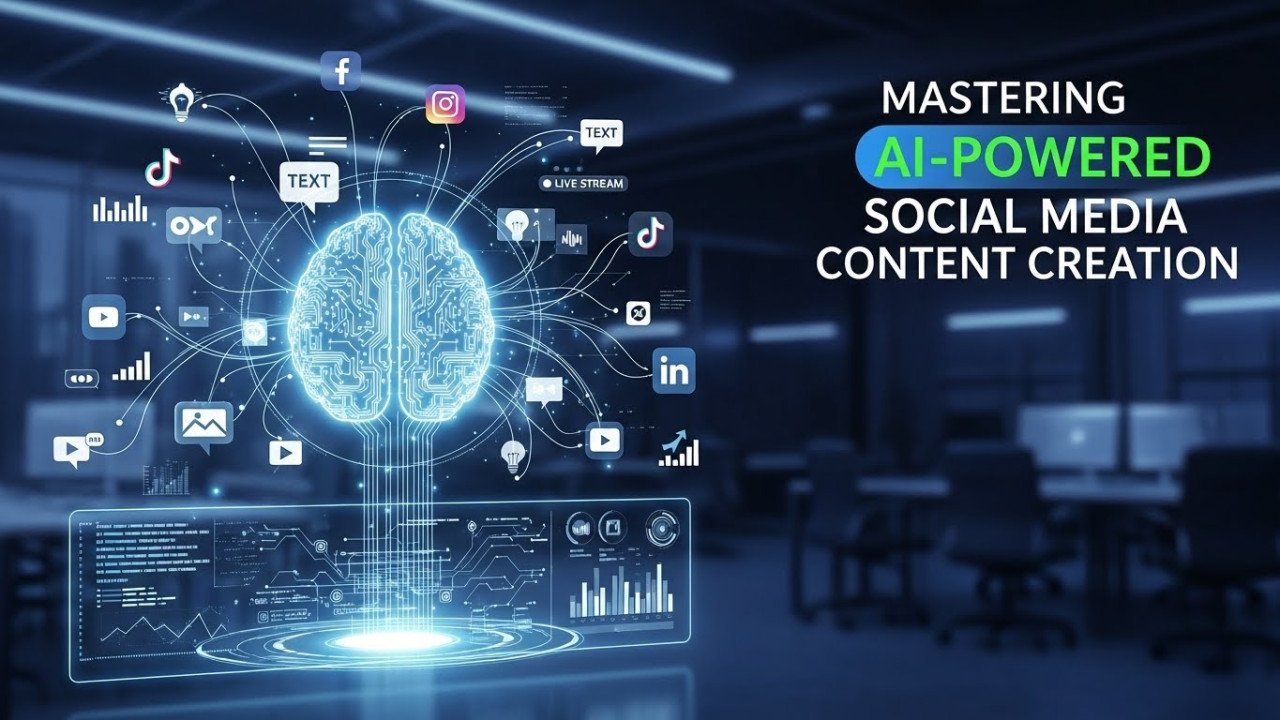
Mastering AI Social Media 2026: The Ultimate Guide to Automated Content Creation
Mastering AI-Powered Social Media Content Creation: Strategic Framework, Platform Selection, and Practical Implementation for 2025
The social media landscape has undergone fundamental transformation as generative AI moved from experimental application to essential infrastructure for content creators, marketers, and brands managing presence across multiple platforms. The statistics are staggering: 42 percent of social media managers now leverage AI tools for content creation and scheduling, 92 percent of businesses report intentions to invest in generative AI over the next three years, and organizations implementing AI-driven social media strategies report 30-50 percent increases in engagement, 60-80 percent reductions in content production time, and 25-40 percent improvements in audience reach. Yet despite widespread adoption, most creators and marketing teams remain uncertain about how to strategically leverage AI without sacrificing authentic brand voice, diluting content quality, or creating generic, algorithmic-sounding posts that audiences dismiss as inauthentic.
The most successful social media strategies in 2025 recognize that AI excels at scale, efficiency, and data-driven optimization while human creativity, cultural awareness, and authentic voice remain irreplaceable dimensions of content that genuinely resonates. Rather than using AI to replace creative thinking or expecting algorithms to generate publication-ready content, sophisticated marketers deploy AI to amplify human creativity across multiple channels simultaneously, handle optimization and scheduling intelligently, personalize at scale, and measure performance systematically—while preserving human direction, curation, and authentic perspective. This comprehensive guide addresses the strategic frameworks, tool ecosystems, and practical implementation approaches enabling social media teams to harness AI effectively while creating content audiences want to engage with rather than scroll past.
Strategic Framework: AI's Role in Social Media Value Chain
From Content Planning to Performance Optimization
Effective AI-powered social media requires understanding where AI adds genuine value versus where human judgment remains essential. The optimal workflow integrates AI intelligently across distinct phases:
Phase 1: Strategic Planning and Audience Understanding
This phase remains fundamentally human, requiring market research, audience empathy, and strategic thinking AI cannot provide. Understanding who your audience is, what problems they face, which platforms concentrate your target demographic, and what messaging resonates requires human insight grounded in industry knowledge, customer interactions, and cultural awareness. AI tools like Google Analytics, Metricool, or platform-native analytics provide data; humans translate data into strategy.
Phase 2: Content Ideation and Topic Development
AI accelerates ideation by analyzing trending topics, competitor content, social listening data, and audience engagement patterns to surface content themes likely to resonate. Tools like Predis.ai analyze trends and suggest content ideas; platform-native analytics recommend optimal posting times and identify emerging opportunities. Humans evaluate AI suggestions, filter for alignment with brand values and strategic objectives, and select topics worth developing.
Phase 3: Platform-Specific Content Creation
This phase is where AI provides tremendous value: different social platforms have distinct norms, optimal content lengths, audience expectations, and algorithmic preferences. A LinkedIn thought leadership post differs fundamentally from Instagram caption, which differs from Twitter thread structure. AI tools specialized for specific platforms—MagicPost for LinkedIn, tools optimized for Instagram's visual focus—generate platform-appropriate content addressing those distinct needs.
Phase 4: Content Personalization and Variation Generation
AI efficiently generates multiple variations enabling A/B testing, audience segmentation personalization, and campaign experimentation at scale impossible through manual creation. Rather than manually writing 10 caption variations testing different hooks, CTAs, or emotional appeals, AI generates variations; marketers review, select best performers, and iterate based on engagement data.
Phase 5: Tone and Brand Voice Adjustment
This phase absolutely requires human judgment: AI can generate alternative tonalities, but humans must verify that outputs maintain authentic brand voice, reflect organizational values, and avoid generic corporate language or inappropriate tone shifts. Tools like Jasper enabling brand voice training and Fanpage Karma's tone customization support this, but human review ensures quality.
Phase 6: Scheduling, Publishing, and Community Management
AI-powered scheduling optimizes posting times based on historical engagement data, competitor activity, and audience timezone distribution. Once published, AI assists with community management through chatbots handling routine questions, AI-powered responses to comments, and content moderation support. Humans focus on meaningful engagement, relationship-building, and handling complex customer issues requiring empathy and contextual judgment.
Phase 7: Performance Analysis and Iteration
AI analytics systems track engagement, identify emerging trends in content performance, and recommend optimizations. Rather than manually calculating metrics, AI surfaces insights automatically; marketers interpret findings and adjust strategy accordingly.
Avoiding Common Pitfalls: Authenticity, Consistency, and Voice
The most critical risks in AI-powered social media involve sacrificing authenticity, voice consistency, and strategic alignment for efficiency gains:
Generic, Templated Content: AI trained on aggregate marketing content tends toward generic best practices, corporate jargon, and lowest-common-denominator messaging that fails to differentiate. Mitigation requires investing in brand voice training (teaching AI your specific communication style), substantial human editing to inject personality and perspective, and willingness to deliberately deviate from AI suggestions when authentic voice demands it.
Over-Optimization: Posts optimized excessively for algorithms sound robotic—excessive hashtag insertion, artificial keyword stuffing, unnatural CTAs, or engagement bait undermines trust and ultimately performs worse than authentic content. Mitigation involves using AI primarily for research, ideation, and optimization suggestions while humans make final decisions about how extensively to apply algorithmic suggestions.
Lack of Human Curation: Publically AI-generated content without human review sometimes contains factual errors, inappropriate recommendations, or tone-deaf suggestions that damage brand reputation when published. Even sophisticated AI occasionally generates problematic content—offensive statements unintentionally, factually incorrect claims, or suggestions misaligned with brand values. Rigorous human review before publishing, particularly for brand-facing content, remains essential.
Platform Inconsistency: Different team members using different AI tools, prompts, or workflows can create inconsistent voice and experience across channels. Mitigation involves standardizing on core tools, establishing brand voice guidelines that tools apply consistently, and implementing review processes ensuring consistency.
Core AI-Powered Social Media Tools: Selection and Application
Comprehensive All-in-One Platforms
Jasper serves as foundational platform for teams prioritizing brand consistency and scalable content workflows across multiple channels. The platform's extensive brand voice training enables AI learning your specific communication style, tonality, and messaging patterns, producing outputs that sound authentically like your brand rather than generic AI. Over 80 marketing templates, team collaboration features enabling concurrent work, content rewriting capabilities (adjusting tone, length, or style), and workflow automation supporting complex multi-step campaigns position Jasper as enterprise-grade solution. Pricing reflects enterprise positioning ($39-125+/month depending on tier).
Metricool integrates AI content generation, multi-channel scheduling, AI-powered analytics, and campaign management into unified dashboard, appealing particularly to agencies and teams managing multiple client accounts. Custom tone settings adapt AI output to brand voice, smart scheduling recommends optimal posting times based on audience activity patterns, and automatic alt-text generation supports accessibility while reducing manual work. The platform manages Instagram, TikTok, Facebook, LinkedIn, X, YouTube, Pinterest, Twitch, and Google Business Profile simultaneously, supporting campaigns across any combination without context switching.
ContentStudio similarly integrates AI post creation, scheduling, analytics, and content discovery into single platform, prioritizing user-friendly interface enabling rapid campaign creation. The new ContentPen feature generates blog content tailored to brand voice, extending AI assistance beyond social to owned media. The platform's single-dashboard approach appeals to teams preferring minimized tool proliferation.
Fanpage Karma provides all-in-one social media management with AI specifically designed for content creation, performance optimization, and community management. The AI generator creates captions from rough drafts customizable by brand, industry, and writing style; feedback functions review drafts for tonality consistency and suggest specific improvements. Integration with scheduling and publishing systems enables content moving from AI creation through optimization and publication without tool switching.
Platform-Specific Specialized Tools
MagicPost specializes in LinkedIn content, acknowledging LinkedIn's distinct algorithms, audience expectations, and professional norms differing fundamentally from other platforms. The Hook Generator automatically creates attention-grabbing openers, essential for LinkedIn's crowded feed competition. Fine-tuning to LinkedIn-specific mechanisms ensures generated content optimizes for platform algorithms—timing, language, content types that perform well.
Lately excels at content repurposing—transforming longer-form content (blog articles, podcasts, videos) into multiple platform-specific social posts optimized for engagement on each channel. Rather than writing individual posts, Lately analyzes source material and generates tailored variations for each platform, capturing the transformative opportunity of repurposing existing investments. Brand guideline storage ensures repurposed content maintains consistent tonality and language despite varied source materials.
Predis.ai focuses on trend analysis and content ideation, surfacing trending topics, suggesting content angles likely to resonate, and generating captions, hashtags, and visual ideas comprehensively. The platform's trend-based approach helps creators stay current and relevant rather than recycling generic content. Streamlined workflows enabling rapid post generation support maintaining active feeds without excessive manual effort.
Specialized Capabilities for Specific Tasks
AIOSEO's AI Content integrates directly into WordPress dashboards, automating blog post repurposing into optimized social media posts with single click. Rather than manually extracting blog content and writing social posts, one-click repurposing creates on-brand social content automatically.
ChatGPT remains versatile for brainstorming, caption generation, hashtag suggestions, and platform-specific content ideation despite lacking specialized social media focus. The conversational interface supports iterative refinement—requesting variations, tone adjustments, or different approaches within single conversation. ChatGPT excels for teams preferring flexibility and those exploring AI capabilities before committing to specialized tools.
ManyChat addresses community management through conversational automation handling customer questions, lead qualification, and 24/7 responses across Instagram DMs, TikTok, WhatsApp, and Messenger. Natural language processing handles typos and recognizes intent, adapting responses authentically rather than appearing robotic.
Metricool's Smart Scheduling specifically optimizes posting times based on audience activity patterns and engagement history—crucial for reaching audiences when they're most attentive.
Hootsuite with AI integration (particularly the newer Owly AI assistant) supports post creation, campaign planning, video generation, and audit and optimization recommendations across platforms. As established social management platform, Hootsuite's AI integration benefits from existing scheduling, analytics, and multi-account management capabilities.
Practical Implementation: From Strategy to Consistent Execution
Phase 1: Tool Selection Based on Specific Needs
Rather than adopting all available tools, strategic selection matching particular business needs maximizes ROI while minimizing tool proliferation:
For brands prioritizing consistency across channels: Jasper or Metricool with brand voice training provide sophisticated personalization ensuring cohesive experience.
For content-heavy operations requiring volume: Lately's repurposing and Fanpage Karma's all-in-one approach enable high-volume output without proportional time investment.
For platform-specific optimization: MagicPost for LinkedIn-focused strategies, AIOSEO for WordPress-connected organizations, or platform-native AI assistants integrated into Facebook Business Suite, LinkedIn Creator Mode, TikTok Creator Fund.
For trend-responsive content: Predis.ai and social listening integrations enable staying current without requiring constant manual trend monitoring.
For team collaboration and complex workflows: Jasper or Metricool supporting concurrent work, version control, and approval workflows enable multiple team members contributing without chaos.
For budget-conscious teams: ChatGPT free tier + platform-native scheduling (Instagram Business Suite scheduling, Facebook Creator Studio, LinkedIn scheduling tools) + Google Analytics provide foundational capability at zero cost with paid tool additions supporting higher volume.
Phase 2: Establishing Brand Voice and Guidelines
Regardless of tools selected, establishing explicit brand voice guidelines ensures AI-generated content maintains authenticity:
Define core characteristics: Tone (professional vs. casual vs. inspirational), perspective (industry expert, approachable peer, thought leader), personality traits (humorous vs. serious, verbose vs. concise), and values reflected in messaging.
Document communication preferences: Preferred vocabulary and terminology your brand uses, phrases or language to avoid, common themes and recurring messages, storytelling approach and narrative style.
Establish platform-specific variations: While maintaining core voice, acknowledge that Instagram captions differ from LinkedIn thought leadership, TikTok comments differ from Twitter engagement, professional versus casual platform norms.
Create style guide: Documenting these guidelines in accessible format enables consistent application across team members and AI tools.
Tools like Jasper support uploading brand guidelines directly, enabling AI to learn and apply your voice consistently. Even tools lacking formal brand training benefit from explicit guidelines referenced during review and editing phases.
Phase 3: Content Production Workflow
A structured workflow prevents chaos and ensures consistent quality:
Weekly planning meetings: Identify 1-2 strategic themes for week, identify key content opportunities, plan cross-platform campaigns.
Brainstorm session with AI assistance: Use tools like Predis.ai, social listening platforms, or ChatGPT to surface trending topics, competitor approaches, audience questions providing content seeds.
Content outline generation: For each planned piece, create outline specifying key messages, sections, CTAs, tone, and platform adaptations.
AI draft generation: Using platform-specific tools optimized for each channel, generate initial draft reflecting outline.
Human review and editing: Evaluate AI drafts for accuracy, brand voice alignment, authenticity, appropriate tone, and strategic fit.
Variation generation: Create 2-3 alternative versions testing different hooks, CTAs, or emotional appeals.
Scheduling and publishing: Use platform scheduling tools to distribute optimally, sequencing posts across time zones and platforms.
Performance monitoring: Track engagement 24-48 hours post-publication, identify high-performers informing future content, iterate on approach based on evidence.
Phase 4: Community Management and Authenticity Maintenance
Post-publication, authentic engagement differentiates brands from AI-only competitors:
Respond meaningfully to comments: While ManyChat can handle routine questions, meaningful engagement requires human responses acknowledging specific commenter perspectives, building relationships.
Engage with community: Like, comment, and share relevant content from audience members and industry peers, demonstrating genuine community membership rather than broadcast-only presence.
Monitor sentiment and feedback: Use social listening to identify emerging issues, customer concerns, or reputational threats requiring human response.
Share behind-the-scenes and authentic moments: Humanize brand through genuine, unpolished content that AI rarely generates naturally, differentiating from competitors publishing entirely AI-optimized content.
Platform-Specific Optimization Strategies
Instagram: Visual Consistency and Aesthetic Cohesion
Instagram prioritizes visual identity and aesthetic consistency. AI-powered approaches include:
Consistent visual branding: Modern generative AI creates platform-optimized images maintaining your unique visual style across hundreds of posts. Rather than sourcing diverse imagery, AI generates variations reflecting your visual aesthetic.
Seasonal variations: AI creates seasonal product imagery, promotional visuals, and themed content without requiring repeated photoshoots.
Caption optimization: AI generates Instagram-specific captions incorporating relevant hashtags, CTAs, and engagement-driving techniques optimized for Instagram's algorithm.
Reels content: AI assists in creating short-form video scripts, suggesting trending audio, and generating captions.
LinkedIn: Thought Leadership and Professional Narrative
LinkedIn rewards authentic professional perspective, genuine insights, and relationship-building. Effective AI approaches:
Thought leadership positioning: MagicPost's Hook Generator creates attention-grabbing openers distinguishing posts in crowded feed. Behind compelling hook, humans provide genuine perspective, experience-based insights, or original analysis.
Content repurposing: Lately transforms blog articles and research into LinkedIn-formatted thought leadership posts, repurposing existing investments.
Viral post structure: Tools like EasyGen enable creating high-engagement posts through strategic structure—data-supported claims, surprising insights, clear takeaways.
Authentic voice imperative: LinkedIn success depends on authentic personality shining through polished content. AI should generate structure and optimization suggestions; humans inject genuine perspective preventing algorithmic sameness.
TikTok: Trend Responsiveness and Authenticity
TikTok prioritizes authenticity, current trends, and genuinely entertaining content—dimensions where AI assists but human creativity remains essential:
Trend identification: Predis.ai and social listening identify trending audio, hashtags, and content formats providing scaffolding.
Script generation: AI generates script outlines or talking points; humans record authentic content with personality.
Repurposing from other platforms: Tools like the platform described in convert Instagram Reels and other content into TikTok format automatically.
Captions and transitions: AI assists with caption generation, transitions, and technical optimization; human creativity drives entertainment value and trend participation authenticity.
Performance Measurement and Continuous Optimization
Establishing Baseline Metrics
Before implementing AI systems, establish baseline engagement, reach, and conversion metrics enabling evaluation of AI's actual impact:
Engagement metrics: Average likes, comments, shares per post; comment sentiment; engagement rate.
Reach and impressions: Total reach per platform, impressions, account growth rate.
Audience metrics: Follower growth rate, audience demographics, audience retention.
Conversion metrics: Click-through rates, link conversions, customer acquisition from social.
Measuring AI Implementation Impact
After implementing AI-assisted content creation:
Content production efficiency: Time spent on content creation per post; time freed for strategic activities; team members required to maintain publishing schedule.
Engagement improvements: Percentage changes in likes, comments, shares, engagement rates compared to baseline.
Reach expansion: Subscriber or follower growth acceleration; impressions changes; new audience segments reached.
Conversion improvements: Changes in click-through rates, customer acquisition cost from social, revenue directly attributable to social.
Content velocity: Number of pieces published per month; quality consistency across pieces.
Iterative Optimization
Rather than fixed strategies, continuous optimization based on performance data drives improvement:
High-performer analysis: Identify which content themes, formats, CTAs, or posting times drive disproportionate engagement. Replicate successful patterns in future content.
A/B testing: Generate AI variations testing different approaches; measure performance differences; scale approaches winning tests.
Seasonal adaptation: Adjust content strategy seasonally based on historical performance patterns and upcoming events.
Audience segmentation refinement: As understanding of audience preferences deepens, target segments more precisely, personalizing content for particular groups.
Conclusion: Human Creativity Amplified by AI at Scale
The future of social media success belongs to organizations recognizing that AI is fundamentally a creativity amplifier and efficiency multiplier, not a replacement for authentic human voice, cultural awareness, and strategic thinking. Organizations that deploy AI purely for cost reduction—minimal human editing, algorithm-optimized content, volume over quality—create generic output audiences scroll past. Those treating AI as tool enabling human creativity to operate at unprecedented scale while maintaining authenticity, strategic clarity, and genuine community engagement build loyal audiences and sustainable competitive advantage.
The implementation window remains open but narrowing: as AI becomes table stakes for social media management, competitive gaps between early adopters and laggards widen permanently. Successful implementation requires thoughtful tool selection matching business needs, explicit brand voice guardrails ensuring authenticity, structured workflows enabling consistent execution, and commitment to meaningful human engagement that algorithms and automation cannot replicate. Organizations beginning now with strategic AI implementation position themselves to create content at unprecedented scale while audiences perceive authentic, valuable, genuinely engaging content distinguishing them from AI-only competitors.



Comments (0)
No comments found