


Artificial Intelligence in 2026: Revolutionary Expert Insights on the Future of AI
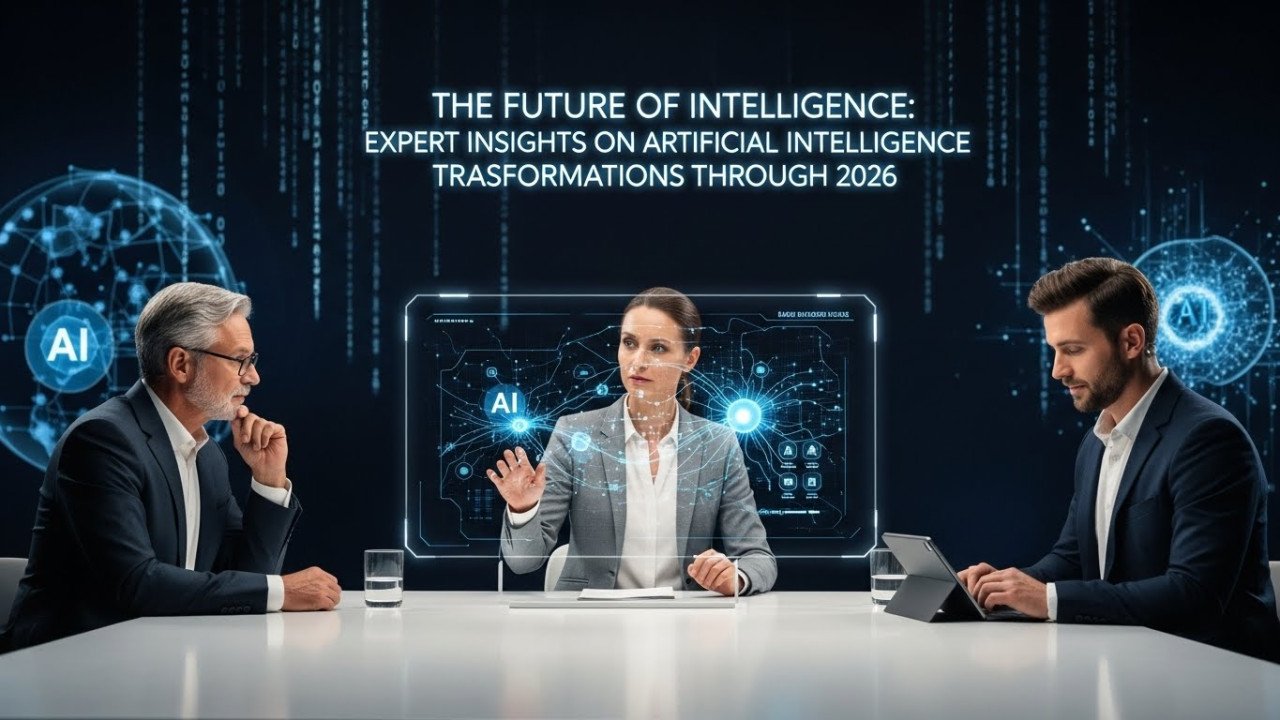
The Future of Intelligence: Expert Insights on Artificial Intelligence Transformations Through 2026
Artificial intelligence has transcended its experimental phase and entered a transformative era where theoretical promises are becoming tangible realities. As we navigate through unprecedented technological evolution, experts across industries are converging on compelling forecasts about how AI will fundamentally reshape society, business operations, and human collaboration over the coming years. With the global AI market surpassing $279 billion in 2024 and maintaining an impressive annual growth trajectory of 26.6%, we stand at an inflection point where intelligent systems are transitioning from novel innovations to essential infrastructure.
The convergence of multiple technological advances—from autonomous agents capable of complex decision-making to multimodal systems that process information like human cognition—is creating an ecosystem where AI doesn't merely augment existing processes but fundamentally reimagines what's possible. Industry leaders, academic researchers, and technology entrepreneurs are painting a picture of 2026 as the year when AI reaches critical mass in enterprise adoption, with systems demonstrating reasoning capabilities, contextual awareness, and operational autonomy that previous generations could only imagine.
Understanding these transformations requires examining both the technological architectures emerging from research laboratories and the practical applications already reshaping industries. The predictions from experts reveal not just incremental improvements but paradigm shifts in how organizations leverage intelligence—whether artificial or human—to solve problems, serve customers, and create value. These forecasts also illuminate critical challenges around governance, ethics, security, and the evolving relationship between humans and intelligent machines.
The Autonomous Revolution: Agentic AI Reshapes Enterprise Operations
From Reactive Tools to Proactive Collaborators
The evolution from traditional AI assistants to autonomous agents represents one of the most significant technological leaps in recent history. Unlike conventional chatbots that respond to prompts or execute predefined scripts, agentic AI systems demonstrate genuine autonomy—planning multi-step workflows, adapting strategies based on outcomes, and coordinating with external systems to achieve long-term objectives without constant human supervision. According to recent enterprise adoption surveys, while fewer than 5% of organizations deployed agentic AI in 2025, this figure is projected to explode to 40% by late 2026, marking a fundamental shift in how businesses approach automation.
What distinguishes these autonomous agents from their predecessors is their capacity for goal-directed behavior and contextual reasoning. GitHub Copilot exemplifies this capability in software development, where the AI doesn't simply suggest code snippets but comprehends project context, debugs issues independently, and refactors entire functions without requiring explicit instructions for each action. This represents a philosophical transformation: organizations are realizing that the return on investment from AI comes not from augmenting human tasks but from delegating complete processes to autonomous systems capable of managing complexity end-to-end.
The implications for enterprise architecture are profound. PwC's AI Agent Survey from May 2025 revealed that 35% of organizations report broad adoption of AI agents, with 17% achieving full company-wide implementation. These systems are handling customer service escalations, performing financial analysis workflows, and optimizing supply chain operations with minimal human intervention. The shift from user-centric to worker-centric design philosophy means enterprise software is being reimagined to accommodate a digital workforce where AI agents function as virtual team members rather than mere tools.
Specialized Agents and Industry-Specific Applications
The maturation of agentic AI is driving the emergence of highly specialized systems tailored to specific industries and functions. In healthcare, autonomous agents are managing entire patient journeys—from triaging symptoms and scheduling diagnostic tests to analyzing results, flagging anomalies, and coordinating follow-up care. This capability is particularly valuable given the administrative burden facing healthcare providers, where AI-powered documentation tools are reducing clinician burnout by automating real-time charting and improving accuracy.
Financial services are deploying agents that conduct deep research autonomously, evaluating thousands of academic papers, forecasting market trends, and analyzing regulatory changes to assist with strategic decision-making. These deep research agents transform the role of financial analysts from data gatherers to strategic interpreters, freeing professionals to focus on creative problem-solving rather than information synthesis. Similarly, legal research agents are parsing case law, identifying precedents, and drafting preliminary contract language—work that traditionally consumed significant billable hours.
Manufacturing operations are witnessing substantial gains from agentic systems that coordinate complex production workflows. Early adopters report efficiency improvements of 25-40% as AI agents handle routine digital operations, from inventory management and quality control to predictive maintenance scheduling. The collaborative robot (CoBots) market is achieving 30% penetration in manufacturing facilities, where AI-enabled robots work safely alongside human workers, adapting to changing conditions and understanding human intent through advanced perception systems.
The Human-Agent Partnership Model
Rather than displacing human workers, the most successful implementations of agentic AI are establishing partnership models where autonomous systems handle operationally intensive tasks while humans focus on strategic oversight, creative problem-solving, and ethical judgment. This collaboration model acknowledges that AI excels at processing vast information volumes, identifying patterns, and executing repetitive workflows with perfect consistency, while humans contribute contextual understanding, emotional intelligence, and values-based decision-making.
Organizations leading this transformation are investing heavily in workforce preparation and governance frameworks. Human capital management platforms are evolving to track hybrid workforces that include both human employees and digital workers, with sophisticated analytics measuring productivity, resource allocation, and collaborative effectiveness across this blended team structure. This necessitates new approaches to workforce planning, where leaders consider not just headcount but the optimal balance between human judgment and autonomous execution for specific business processes.
The transition also requires cultural adaptation as teams learn to trust AI-driven recommendations and understand the boundaries of autonomous systems. Research indicates that 82% of employees welcome AI integration when they understand how it augments rather than replaces their roles. However, this acceptance depends on transparency around AI decision-making, clear accountability structures when systems err, and ongoing training that helps workers develop complementary skills—prompt engineering, AI oversight, and strategic interpretation of machine-generated insights.
Generative Intelligence Expands Beyond Content Creation
Multimodal Systems and Cross-Domain Understanding
The next generation of generative AI is transcending text-based interactions to embrace truly multimodal capabilities that mirror human cognitive processing. These advanced systems seamlessly integrate text, images, audio, video, and structured data in unified workflows, eliminating the artificial silos that characterized earlier AI architectures. Google's anticipated Gemini 3 and OpenAI's GPT-5 represent this evolutionary leap, handling diverse input formats simultaneously and generating contextually appropriate outputs across modalities.
This convergence has profound implications for creative industries and enterprise operations alike. Marketing teams can now work with AI systems that analyze product photographs, generate compelling copy, create video demonstrations, and produce audio descriptions from a single prompt—capabilities that previously required coordination across multiple specialized tools and teams. The efficiency gains are substantial, with some content production workflows reporting time savings of 60-75% compared to traditional methods.
Educational applications are particularly promising, as multimodal AI enables personalized learning experiences that adapt to individual student needs across visual, auditory, and kinesthetic learning styles. By 2026, AI-powered tutoring systems are expected to be as ubiquitous as smartphones, providing customized instruction that adjusts pacing, explanations, and assessment methods based on real-time analysis of student comprehension and engagement. This democratization of high-quality education could address long-standing equity gaps in access to personalized instruction.
Scientific Discovery and Research Acceleration
Beyond commercial applications, generative AI is emerging as an indispensable partner in scientific research, where its capacity to synthesize vast literature, identify cross-disciplinary patterns, and generate novel hypotheses is accelerating discovery timelines. Tools like Google NotebookLM demonstrate how AI can process decades of research papers in hours, surfacing insights that might elude human researchers working within the constraints of individual expertise and cognitive bandwidth.
Drug discovery exemplifies this transformative potential. AI systems are now modeling molecular interactions, predicting compound behaviors, and identifying promising therapeutic candidates at speeds that compress years of laboratory work into weeks. The intersection of CRISPR gene editing technology with AI-powered analysis is enabling faster, safer experiments in genetic medicine, with potential breakthroughs in treating cancer, cystic fibrosis, muscular dystrophy, and other genetic conditions expected to emerge in clinical applications by 2026.
Materials science is experiencing similar acceleration as generative AI models simulate chemical reactions and predict material properties with unprecedented accuracy. This capability enables researchers to explore vast solution spaces computationally before committing resources to physical experimentation, dramatically reducing development cycles for everything from sustainable batteries and high-efficiency solar cells to advanced construction materials and semiconductor technologies. Climate modeling benefits equally, with AI processing complex atmospheric data to generate more accurate predictions and identify intervention strategies.
The $33.9 billion in private investment flowing into generative AI during 2024—an 18.7% increase from the previous year—underscores the capital markets' confidence in these research applications. However, experts emphasize that realizing this potential requires maintaining rigorous validation standards, ensuring diverse training datasets, and establishing clear protocols for human oversight of AI-generated scientific hypotheses.
Entertainment and Creative Expression
The entertainment industry is witnessing a fundamental transformation as generative AI moves from post-production assistance to active creative collaboration. Netflix's deployment of AI in the Argentinian series "El Eternauta" demonstrated how generative systems can slash production timelines and costs compared to traditional animation and special effects techniques. By 2026, mainstream adoption of AI-generated content in big-budget television and Hollywood productions is expected, fundamentally altering the economics of visual storytelling.
Gaming represents one of the most exciting frontiers for generative AI, where developers are creating experiences with emergent narratives that adapt dynamically to player decisions. Rather than following predetermined storylines, games powered by generative systems feature non-player characters that hold genuine conversations, demonstrate personality consistency, and react authentically to unexpected player actions. This creates dramatically richer, more immersive experiences while simultaneously reducing production costs and expanding creative possibilities for studios operating with limited budgets.
Music and interactive entertainment are experiencing similar innovations, with AI systems generating personalized soundscapes, adaptive musical scores that respond to player emotions, and even collaborative composition tools that augment human creativity. The World Economic Forum's analysis suggests that generative AI could eventually account for up to 90% of internet content, fundamentally reshaping content distribution, discovery, and monetization models. This raises important questions about authenticity, artistic attribution, and the economic sustainability of human creators—challenges that the industry is actively grappling with through voluntary codes of practice and emerging regulatory frameworks.
Healthcare Transformation Through Intelligent Systems
Diagnostic Excellence and Clinical Decision Support
Artificial intelligence is transitioning from back-office utility to active clinical partner, with 2026 marking a decisive shift toward AI-embedded healthcare delivery across diagnostic, therapeutic, and operational domains. The most mature applications center on medical imaging, where deep learning models now match or exceed specialist accuracy in identifying anomalies across CT scans, MRIs, X-rays, and other diagnostic modalities. These systems don't replace radiologists but augment their capabilities—flagging suspected lesions, fractures, or nodules for prioritized review, automating measurements to reduce variability, and accelerating throughput in departments facing growing imaging volumes.
Clinical decision support systems are evolving beyond simple rule-based alerts to sophisticated predictive analytics that identify deterioration risks before symptoms manifest. Models like Delphi-2M analyze patterns across multiple physiological inputs to surface early sepsis signals, predict readmission likelihood, and forecast population-level disease susceptibility. Hospitals implementing these systems report measurable reductions in avoidable adverse events, more efficient high-acuity bed allocation, and consistent application of evidence-based guidelines.
Healthcare spending on AI-driven clinical decision support grew approximately 35% between 2024 and 2025, with continued acceleration expected through 2026 as organizations shift from pilot projects to enterprise-scale deployments. This transition is enabled by improved interoperability standards, federated learning approaches that preserve patient privacy while enabling model improvement, and explainable AI techniques that help clinicians understand and trust system recommendations. The emphasis on transparency and human oversight reflects healthcare's recognition that AI must enhance rather than diminish the clinical judgment at the core of quality patient care.
Remote Monitoring and Preventive Care
The convergence of AI with wearable technology and Internet of Medical Things (IoMT) devices is transforming chronic disease management from reactive intervention to proactive prevention. Smart devices continuously track heart rate variability, blood oxygen saturation, glucose levels, and other vital metrics, generating torrents of real-time physiological data. AI systems transform this information into actionable clinical insights—detecting cardiac irregularities, predicting glycemic events, and identifying early warning signs that prompt intervention before health crises develop.
By 2025, an estimated 71 million Americans were using remote patient monitoring tools, a figure that continues expanding as healthcare systems recognize both the clinical and economic value of keeping patients healthy at home rather than managing acute exacerbations in emergency departments. The cost savings are substantial, with remote monitoring programs reducing hospitalizations by 20-30% for chronic heart failure patients and similar magnitudes for other conditions. Equally important are quality-of-life improvements for patients who maintain independence while receiving continuous clinical oversight.
Digital twins—virtual replicas of individual patients powered by real-time data and AI modeling—represent an emerging frontier in personalized medicine. These simulations enable clinicians to test treatment protocols computationally before administration, modeling how specific interventions might affect patients based on their unique physiology, genetic profile, medications, and comorbidities. The technology is gaining traction in cardiac care, oncology, and complex chronic disease management, where individualized treatment optimization can dramatically improve outcomes. Hospital-level digital twins are simultaneously being deployed to model patient flow, capacity constraints, and demand fluctuations, helping administrators reduce overcrowding and improve operational efficiency.
Operational Efficiency and Administrative Relief
Healthcare's administrative burden—estimated to consume over $250 billion annually in the United States alone—represents a critical target for AI-driven efficiency improvements. Ambient scribe technologies exemplify this opportunity, using natural language processing to automate real-time clinical documentation during patient encounters. These systems capture conversation context, generate structured notes, and populate electronic health records with appropriate coding, dramatically reducing the after-hours charting that contributes to clinician burnout.
AI-powered patient communication systems are handling routine interactions that previously required staff time: appointment scheduling, prescription refill requests, insurance verification, and basic triage. Industry forecasts suggest healthcare chatbots could save over $3 billion annually by streamlining these administrative workflows, with the added benefit of improving accessibility through 24/7 availability and multilingual support. When integrated with comprehensive platforms that ensure consistent access to current patient data, these tools enhance continuity of care while reducing administrative overhead.
Claims processing, prior authorization, and billing workflows are being transformed by machine learning systems that read documentation, verify coverage, flag discrepancies, and expedite low-risk approvals. This automation accelerates care delivery, reduces denial rates, and improves payer-provider collaboration through more transparent communication channels. The emphasis on operational AI reflects healthcare's recognition that delivering better patient outcomes requires not just clinical innovation but fundamental process improvements that free caregivers to focus on direct patient interaction rather than administrative tasks.
Cybersecurity Challenges in the Age of Intelligent Threats
AI-Powered Attack Sophistication
The same generative capabilities revolutionizing legitimate applications are simultaneously empowering malicious actors with unprecedented offensive tools. Security leaders report that 77% of Chief Information Security Officers now view AI-crafted phishing as among the most dangerous emerging threats, as generative models produce messages, voice communications, and documents that align precisely with target workplaces, roles, and communication patterns. These sophisticated social engineering attacks are exponentially harder to detect than traditional phishing attempts, as they incorporate contextual details, appropriate terminology, and authentic-seeming urgency that bypasses conventional warning signs.
Ransomware operations are leveraging AI to accelerate every phase of attack lifecycles—from automated vulnerability discovery and script-driven privilege escalation to multi-stage intrusions requiring minimal human oversight. With 61% of CISOs confirming that AI has increased ransomware exposure, this threat has evolved from isolated incidents to systemic organizational risks capable of disrupting operations, supply chains, and business continuity strategies across entire sectors. The shift toward AI-enabled ransomware-as-a-service (RaaS) is particularly concerning, as it lowers technical barriers and enables less sophisticated actors to launch damaging campaigns.
Deepfake technology is creating unprecedented identity security challenges, with real-time AI-generated video and audio making it nearly impossible to distinguish authentic communications from fabrications. The threat is amplified by the ratio of autonomous agents to humans—estimated at 82:1 by some analyses—creating scenarios where a single forged command from a "CEO doppelgänger" could trigger cascading automated disasters across interconnected systems. This erosion of trust in digital identity necessitates fundamental shifts from authentication approaches focused solely on blocking unauthorized access to frameworks that actively validate legitimate users, devices, and AI agents at every interaction.
Emerging Attack Vectors and Defense Strategies
Synthetic identity fraud represents a particularly insidious application of generative AI, where attackers fabricate complete identities—government documents, credential histories, communication patterns—capable of infiltrating organizations, financial systems, and privileged networks. These AI-generated personas can pass traditional verification processes, enabling everything from loan fraud and benefits exploitation to insider threats where synthetic identities gain legitimate system access before executing malicious activities.
Prompt injection attacks targeting enterprise AI systems are growing rapidly as more organizations deploy large language models for internal operations. These attacks manipulate AI systems to bypass security protocols and execute attacker-specified commands, potentially exposing sensitive data, compromising decision-making processes, or pivoting to adjacent systems. The vulnerability is particularly acute because many organizations lack mature governance frameworks for AI deployment, creating gaps in monitoring, logging, and incident response capabilities.
The advent of accessible AI coding tools is democratizing malware development in ways that fundamentally reshape threat landscapes. While current generative AI struggles with complex exploit creation, rapid improvements in training data quality and model sophistication suggest that by 2026, individuals with minimal technical skills may generate highly disruptive malware through simple prompts. This capability transforms the insider threat profile, as employees, contractors, or partners with legitimate system access could leverage AI-generated malware to cause substantial damage without specialized cybersecurity knowledge.
Quantum Computing and Encryption Vulnerabilities
The convergence of advancing quantum computing capabilities with AI systems introduces longer-term but potentially catastrophic security implications. Quantum computers promise exponential increases in processing power that could render current encryption standards obsolete, enabling attackers to decrypt communications, break authentication systems, and compromise cryptographic foundations of digital security. While large-scale, fault-tolerant quantum systems remain years away—with IBM targeting 2029 for this milestone—security leaders emphasize the urgency of transitioning to quantum-resistant encryption protocols before these capabilities mature.
Preparing for quantum threats requires organizational action today, as encrypted data stolen currently could be decrypted retrospectively once quantum systems become available—a "harvest now, decrypt later" threat model. Financial services, healthcare organizations, and government entities handling sensitive information over multi-year timescales are particularly vulnerable to this scenario. The National Institute of Standards and Technology and other bodies are developing post-quantum cryptography standards, but enterprise adoption remains slow, with significant migration challenges around legacy systems, interoperability, and performance overhead.
The intersection of quantum computing with AI presents both opportunities and risks. Quantum-enhanced AI could revolutionize optimization, simulation, and pattern recognition in defensive cybersecurity applications—accelerating threat detection, vulnerability identification, and incident response. However, the same capabilities would equally advantage adversaries, creating an arms race dynamic where security depends on maintaining parity in quantum-AI development. This strategic competition is driving substantial government and private sector investment in quantum research, with predictions that the quantum computing market will expand from billions in 2024 revenue to approximately $72 billion by 2035.
Ethical Governance and Regulatory Frameworks
Accountability and Transparency Challenges
As AI systems assume greater autonomy and influence over consequential decisions, establishing clear accountability frameworks has become a critical governance imperative. The fundamental question—who bears responsibility when AI makes mistakes: developers who created the tools, data providers whose information trained models, or organizations deploying systems—currently lacks consistent answers across jurisdictions and contexts. Measures under consideration include mandating that organizations ensure identifiable humans remain accountable for harm caused by algorithmic bias, hallucinations, or flawed decisions, but implementing these principles faces substantial complexity around distributed responsibility and technical opacity.
The "black box" problem persists as a major barrier to trustworthy AI deployment, particularly in high-stakes domains like healthcare and financial services. Complex neural networks often make decisions through processes that even their creators struggle to fully explain, creating transparency gaps that complicate fairness assessments and regulatory compliance. This challenge is sometimes exacerbated by commercial confidentiality considerations, where AI providers deliberately maintain opacity to protect intellectual property and competitive advantages. Pressure is mounting on developers to adopt explainable AI principles, complemented by organizational requirements to audit algorithmic decision-making and ensure that stakeholders can understand how systems reach conclusions.
Legal frameworks around autonomous AI agents are garnering significant legislative attention as these systems become capable of complex, multi-step actions with minimal human supervision. The critical questions center on autonomy thresholds—how much independent decision-making should AI agents possess—and oversight requirements that balance innovation benefits against risks of misaligned actions. Legislators in 2026 are expected to establish boundaries around agentic autonomy, define mandatory human oversight for specific decision categories, and clarify penalties when organizations allow machines to act irresponsibly.
International Standards and Regulatory Divergence
AI's borderless nature contrasts sharply with the jurisdiction-specific regulatory approaches emerging globally, creating potential mismatches, compliance complexity, and accountability gaps. The European Union's AI Act—which entered force in August 2024 and becomes fully applicable by August 2026—establishes risk-based governance that prohibits certain unacceptable AI practices (harmful manipulation, social scoring, untargeted facial recognition), imposes strict obligations on high-risk systems, and mandates transparency for generative AI. China and India have similarly introduced national AI regulations, while the United States is addressing governance through state-by-state legislation, resulting in a patchwork of requirements that vary significantly in scope and stringency.
This regulatory fragmentation presents substantial challenges for global organizations that must navigate multiple compliance frameworks with divergent definitions, obligations, and enforcement mechanisms. The EU's emphasis on fundamental rights protection, China's focus on state oversight and content control, and the U.S. market-driven approach with minimal federal coordination create scenarios where AI systems compliant in one jurisdiction may violate requirements in another. Establishing international consensus and harmonized frameworks that enable effective global AI governance while respecting jurisdictional sovereignty will be a defining challenge through 2026 and beyond.
Sovereign AI ecosystems are emerging as nations and regions develop localized infrastructure with distinct regulatory frameworks, data residency requirements, and culturally-tailored training datasets. By 2026, mature sovereign AI implementations are expected in the European Union, India, Southeast Asia, and the Middle East, each reflecting regional priorities around data governance, language support, and regulatory compliance. While this creates opportunities for innovation optimized to local contexts, it also presents integration challenges for multinational enterprises managing operations across fragmented AI regulatory environments.
Copyright, Privacy, and Content Authenticity
The training of generative AI systems on copyrighted creative works has ignited contentious debates around fair compensation for human creators whose content enables model capabilities. Legal proceedings have produced mixed outcomes, with some decisions favoring AI companies' transformative use arguments and others supporting artists' compensation claims. Proposed solutions include opt-out mechanisms allowing creators to exclude their work from training datasets, consent management systems where permissions are explicitly granted or withdrawn, and revenue-sharing models that compensate creators proportionally to their contributions. Achieving resolution that preserves innovation incentives while ensuring fair treatment of human creativity remains a central challenge for 2026.
Privacy concerns are intensifying as organizations invest more heavily in generative AI and recognize the risks around personal and customer information exposure. This is driving increased focus on privacy-centric AI architectures where data processing occurs on-premises or directly on user devices rather than in centralized cloud environments. Apple's emphasis on privacy-first AI design exemplifies this approach, and analysts expect other hardware manufacturers and software developers to prioritize similar architectures in 2026 as privacy differentiation becomes a competitive factor.
Misinformation and deepfake proliferation represent urgent societal challenges as generative AI enables production of compelling but false content at unprecedented scale. AI-generated misinformation can erode trust in democratic institutions, exacerbate social divisions, and enable sophisticated fraud schemes. Addressing these threats requires multi-stakeholder approaches: individuals cultivating critical thinking about information consumption and sharing; legislators introducing requirements for labeling AI-generated content and criminalizing malicious deepfakes; and platforms implementing detection systems and content provenance tools. The EU's AI Act includes mandates that AI-generated content be identifiable and that certain outputs—particularly deepfakes and public-interest communications—carry clear, visible labeling.
Infrastructure Evolution and Computing Paradigms
Edge Intelligence and Distributed Processing
The proliferation of edge computing represents a fundamental architectural shift in how AI systems are deployed and operated, moving intelligence from centralized cloud data centers to distributed locations closer to data generation points. This transition is driven by multiple imperatives: reducing latency for real-time decision-making, minimizing bandwidth consumption and transmission costs, improving privacy by processing sensitive data locally, and enabling autonomous operation when network connectivity is unavailable or unreliable.
Specialized AI chips optimized for edge deployment are achieving remarkable efficiency gains, with cutting-edge neuromorphic processors delivering 10 trillion operations per second per watt—roughly six times more efficient than general-purpose CPUs for neural network tasks. These hardware advances make sophisticated AI practical on resource-constrained devices from factory quality-inspection cameras and medical diagnostic equipment to autonomous vehicle sensors and consumer wearables. Neural Processing Units are becoming standard components in edge devices, handling AI workloads while consuming minimal power and enabling battery-operated sensors to function for months in remote industrial environments.
Model optimization techniques are critical enablers of edge AI adoption, shrinking large neural networks to fit within device constraints without sacrificing accuracy. Quantization reduces model sizes by factors of 4-8 through lower-precision numerical representations, while pruning removes unnecessary network connections and knowledge distillation transfers learning from large models to compact variants. Recent innovations like post-training quantization for large language models enable billion-parameter systems to run entirely on-device, bringing enterprise-grade conversational AI to edge applications while maintaining data privacy and supporting offline functionality.
Hybrid Architectures and 5G Enablement
Rather than viewing edge and cloud as mutually exclusive, leading organizations are implementing hybrid architectures that strategically distribute AI workloads based on latency requirements, computational complexity, privacy considerations, and cost optimization. Simple, frequent decisions execute at the edge for speed and local data containment, while complex, infrequent analyses leverage cloud resources when additional processing power or access to comprehensive datasets is beneficial. Federated learning exemplifies this hybrid approach, enabling collaborative model training across distributed edge devices without centralizing sensitive data—allowing multiple facilities to collectively improve AI systems while maintaining proprietary information security.
Split inference architectures divide model execution between edge and cloud, with early processing layers running locally for immediate responsiveness and privacy, while final layers access cloud resources when needed for comprehensive analysis. A healthcare imaging example illustrates this design: portable ultrasound devices perform initial screening for abnormalities on-device, flagging urgent cases immediately for clinical attention, while detailed diagnostic analysis comparing findings against millions of historical cases runs in the cloud and delivers comprehensive reports within hours. This flexibility optimizes both performance and cost while adapting to varying connectivity and urgency requirements.
The synergy between 5G networks and edge AI is enabling new application categories that were previously infeasible. Ultra-low latency 5G connectivity supports distributed intelligence across multiple edge nodes, while enhanced bandwidth capacity accommodates dense deployments of AI-enabled devices. Multi-access edge computing brings cloud-like computational resources to cell tower locations rather than distant data centers, providing cloud capabilities with edge-like latency characteristics. Smart city applications coordinating thousands of sensors in real-time, industrial IoT deployments scaling without infrastructure constraints, and autonomous vehicle fleets sharing learning across distributed systems all benefit from this 5G-edge combination. Looking ahead, 6G networks are expected to integrate AI capabilities directly into network architecture, enabling even more sophisticated distributed processing with terahertz frequencies and ultra-reliable connectivity.
Inference Computing and Infrastructure Specialization
While the training of large AI models continues capturing public attention and headlines, inference—running deployed models to generate outputs for production use—is consuming an increasingly dominant share of AI computational resources. By 2026, inference is projected to account for two-thirds of AI computing power, reflecting the transition from research laboratories to scaled deployment across enterprises and consumer applications. This shift has profound implications for hardware development, with manufacturers responding by designing specialized inference chips optimized for speed, efficiency, and cost-effectiveness rather than the raw training power emphasized in earlier AI infrastructure.
Edge inference acceleration is particularly significant, as processing moves from centralized data centers to locations proximate to data sources and end-users. This distributed inference architecture reduces network latency and bandwidth costs while enabling real-time responsiveness for applications from autonomous vehicles and industrial automation to augmented reality and conversational AI. The infrastructure implications are substantial, as organizations must balance investments between centralized training clusters that support model development and distributed inference infrastructure that serves production workloads.
AI-native development platforms and supercomputing infrastructure are emerging as integrated environments that merge advanced hardware—GPUs, application-specific integrated circuits, and neuromorphic processors—with intelligent software frameworks optimized for AI workloads. Rather than retrofitting AI capabilities onto legacy systems, future-ready organizations are architecting solutions around AI-centric design principles that enable scalable machine learning development, streamlined deployment pipelines, and seamless transitions from research prototypes to production systems. For development teams, this means leveraging integrated toolchains for data modeling, model training, validation, and deployment that abstract complexity while maintaining performance and governance requirements.
The Timeline Toward Artificial General Intelligence
Expert Consensus and Divergent Predictions
The question of when AI will achieve human-level general intelligence—capable of learning, reasoning, and performing intellectual tasks across all domains at parity with or exceeding human capabilities—generates significant debate among experts, with predictions varying based on methodology, definitions, and philosophical perspectives about intelligence itself. Large-scale surveys of AI researchers suggest a median expectation that artificial general intelligence will probably emerge (greater than 50% probability) between 2040 and 2050, with very high likelihood (90% probability) by 2075. These aggregated forecasts reflect academic researcher perspectives, which tend toward conservative timelines compared to industry entrepreneurs who often predict more rapid progress.
Prominent technology leaders offer dramatically accelerated forecasts. Elon Musk and Dario Amodei (CEO of Anthropic) both predict AI surpassing human intelligence by 2026. Eric Schmidt, former Google CEO, suggested in April 2025 that combining advances in reasoning, programming, and mathematical capabilities could yield AGI within 3-5 years. Ray Kurzweil maintains his long-standing prediction that AGI will arrive by 2029, subsequently leading to technological singularity by 2045—a point where AI improvement becomes recursive and accelerates beyond human comprehension. These entrepreneurial predictions often reflect optimism inherent in driving innovation and attracting investment, alongside proximity to cutting-edge capabilities emerging from well-resourced research laboratories.
The MIT report "The Road to Artificial General Intelligence" published in August 2025 offers a middle-ground assessment, suggesting early AGI-like systems could begin emerging between 2026 and 2028, demonstrating human-level reasoning within specific domains, multimodal capabilities across text, audio, and physical interfaces, and limited goal-directed autonomy. The report emphasizes that these initial systems would represent narrow AGI rather than the comprehensive, domain-agnostic intelligence often associated with the term, and estimates 50% probability that broader generalized capabilities—knowledge transfer across domains and comprehensive reasoning—will be achieved by 2028. Longer-range MIT projections estimate machines may surpass human performance across all economically valuable tasks by approximately 2047, contingent on breakthroughs in computational efficiency, algorithmic innovation, and autonomous learning systems.
Measuring Progress and Capability Frontiers
Empirical metrics of AI capability growth provide context for these timeline debates. The computational resources devoted to training frontier models have increased at approximately 4-5 times annually over recent years, a growth rate substantially faster than Moore's Law for general-purpose computing. However, some researchers note that the growth rate of frontier model scale has moderated slightly from the explosive expansion observed earlier this decade, suggesting potential plateaus in certain dimensions of pure scale-driven improvement.
Task length frontier—the duration of tasks that AI systems can successfully complete—has grown exponentially, roughly doubling every seven months according to recent analyses. While older models like GPT-2 could barely handle tasks exceeding a few seconds of human-equivalent effort, current frontier systems including Claude 3.7 Sonnet and OpenAI's o1 model can complete tasks requiring nearly an hour of focused human work. If this trajectory continues, AI systems could soon handle complex assignments that would take humans days or weeks, marking substantial progress toward autonomy levels associated with general intelligence.
The context window capabilities of large language models—the amount of information they can maintain and reason across simultaneously—have expanded dramatically, with some models now processing hundreds of thousands of tokens encompassing entire documents, codebases, or conversational histories. This extended context retention enables AI systems to maintain coherence across complex, multi-step projects and develop deeper understanding of nuanced requirements—capabilities increasingly resembling human cognition's ability to hold and manipulate extensive information over prolonged problem-solving sessions.
Implications and Preparedness Considerations
Regardless of whether AGI arrives in 2029, 2047, or later, the trajectory toward increasingly capable, autonomous AI systems necessitates proactive preparation across technical, societal, and governance dimensions. Safety research focused on alignment—ensuring advanced AI systems pursue objectives consistent with human values and welfare—is receiving growing attention and funding as capabilities approach levels where misalignment could generate substantial harms. Ilya Sutskever, co-founder and former Chief Scientist of OpenAI, emphasizes that while AGI's immense potential is exciting, the profound risks demand that alignment research receive equal prioritization with capability development.
Economic disruption from AI systems approaching or exceeding human-level performance across cognitive tasks will require workforce adaptation strategies, social safety net innovations, and educational systems that prepare individuals for collaboration with highly capable AI rather than competition for routine cognitive work. Early indicators suggest that organizations treating AI as augmentation rather than replacement—combining machine efficiency with human creativity, judgment, and interpersonal skills—achieve superior outcomes compared to those attempting wholesale automation.
The governance challenges multiply as systems approach general intelligence, including questions around AI rights and moral status, international coordination to prevent destabilizing AI arms races, and mechanisms ensuring that transformative AI benefits humanity broadly rather than concentrating power and advantage. The Metaculus forecasting community, which aggregates predictions from individuals with strong track records, currently estimates a 50/50 chance of AGI being "devised, tested, and publicly announced" by 2040—less than 20 years from their 2022 forecast. Whether this timeline proves accurate or not, the velocity of progress suggests that the window for establishing robust governance frameworks, safety protocols, and societal adaptations is narrowing rapidly.
Conclusion: Navigating the Intelligent Future
The convergence of expert predictions, empirical capability growth, and accelerating enterprise adoption paints a portrait of 2026 as a pivotal inflection point in humanity's relationship with artificial intelligence. The technologies transitioning from experimental to production-ready—autonomous agents managing complex workflows, multimodal systems reasoning across diverse data types, AI-augmented scientific discovery, and edge intelligence embedded throughout physical infrastructure—collectively represent a fundamental transformation in how societies organize work, create knowledge, and solve problems.
Success in this emerging landscape requires balanced perspective that embraces AI's tremendous potential while remaining clear-eyed about attendant challenges. Organizations that thrive will be those integrating AI not as isolated tools but as core strategic assets, redesigning workflows around human-machine collaboration, investing in workforce capabilities that complement rather than compete with automation, and establishing robust governance that ensures responsible, transparent, and accountable AI deployment. The technical infrastructure decisions made today—around edge versus cloud architectures, data governance and privacy frameworks, and interoperability standards—will shape organizational agility for years ahead.
Societal preparation is equally critical. Education systems must evolve to emphasize skills that AI cannot easily replicate—creative problem-solving, emotional intelligence, ethical reasoning, and cross-cultural collaboration—while simultaneously building AI literacy that enables effective human-machine partnership. Policymakers face the delicate challenge of crafting regulatory frameworks that protect against genuine risks without stifling innovation, requiring international coordination to address AI's borderless nature while respecting jurisdictional sovereignty and cultural differences.
The trajectory toward artificial general intelligence, whether it arrives in five, twenty, or fifty years, demands that technical capability development remain coupled with safety research, alignment validation, and philosophical consideration of humanity's long-term relationship with intelligent machines. The decisions and investments made in 2026—in infrastructure and algorithms, in education and workforce development, in governance and international cooperation—will substantially influence whether AI's transformation ultimately amplifies human potential or creates new forms of inequality, vulnerability, and risk.
What remains certain is that artificial intelligence is no longer emerging—it has arrived. The question facing leaders across every sector is not whether to engage with AI but how to do so in ways that harness its power for genuine benefit while navigating challenges with wisdom, foresight, and shared commitment to human flourishing. The future being forecast by experts for 2026 is not distant speculation but imminent reality, and the time for preparation is now.


Comments (0)
No comments found