


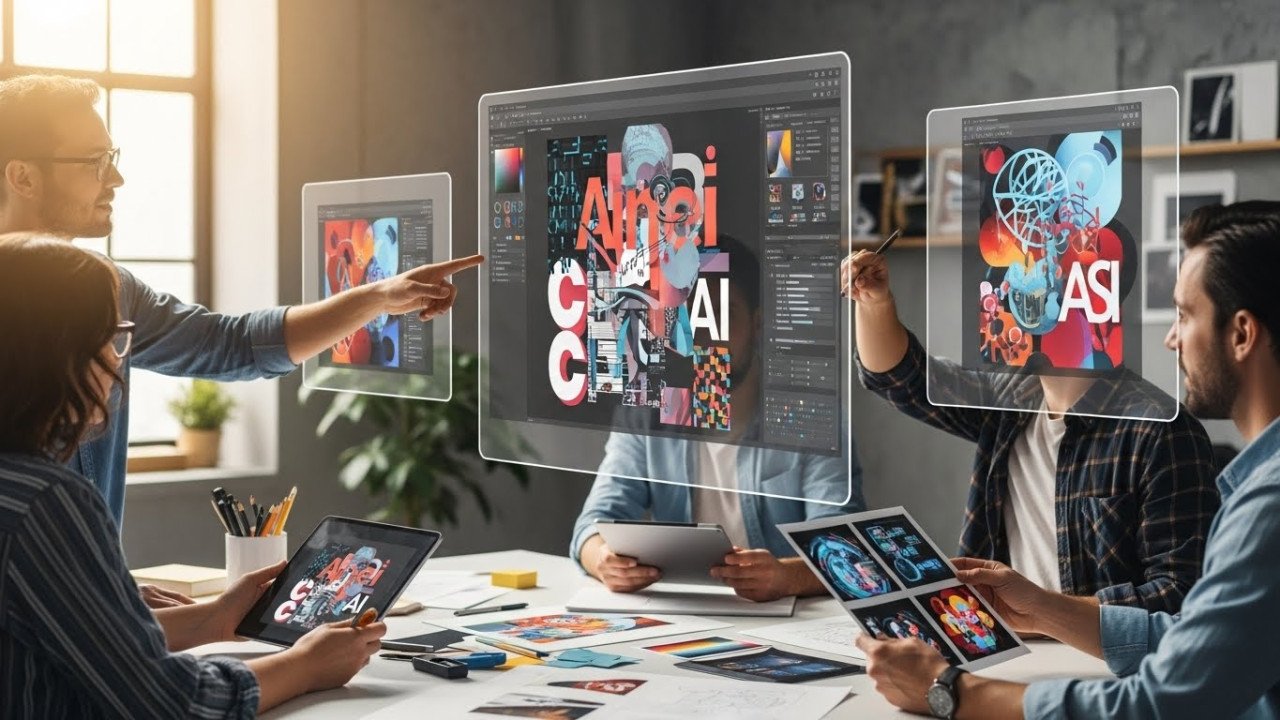
AI Image Generation for Designers 2026: Strategic Implementation & Competitive Advantage
AI Image Generation for Designers: Strategic Implementation, Competitive Advantage, and Professional Evolution in the Creative Landscape
The design profession stands at a watershed moment. For the first time in computing history, tools exist that can generate professional-quality visual assets—layouts, illustrations, photographs, graphic elements—without requiring specialized design training or years of technical development. This capability represents not marginal efficiency improvement but fundamental disruption to traditional design economics and professional positioning.
Rather than predicting design extinction, the reality proves more nuanced and opportunity-rich. Designers adopting AI strategically are simultaneously eliminating tedious work and accessing creative possibilities previously impossible within budget and time constraints. Yet designers treating AI as threat rather than partner risk obsolescence as clients discover they can generate "acceptable" alternatives without professional engagement.
This analysis examines AI's role in contemporary design practice—distinguishing genuine opportunities from hype, exploring legitimate implementation challenges, and providing strategic frameworks for designers to position themselves as indispensable creative leaders in AI-native environments.
Understanding the Actual Disruption: Where AI Excels and Where It Struggles
Honest assessment requires specific clarity about AI's strengths and limitations rather than blanket statements about creative capability.
Where AI Demonstrates Genuine Superiority
Rapid Ideation and Concept Generation: AI excels at speed-to-concept. Designers can generate dozens of design directions, layout alternatives, or compositional variations in minutes—work that historically required days of sketching and refinement. This capability transforms ideation phases, enabling clients to evaluate broader concept ranges and make faster directional decisions.
Commodity Visual Generation: Product photography mockups, placeholder imagery, generic lifestyle visuals, and similar commodity content fall squarely within AI's optimal domain. Rather than expensive photoshoots or stock photography licensing, designers generate custom variations instantly, enabling rapid prototyping and A/B testing.
Repetitive Task Automation: Resizing designs across multiple formats, applying consistent color corrections, generating layout variations, creating asset packages for different media—the tedious production work consuming enormous design time—can now be automated. This efficiency recovery proves transformative for high-volume design operations.
Style Application and Consistency: AI can learn design styles from reference examples and apply them consistently across numerous assets. This capability particularly benefits brand work where maintaining visual consistency at scale previously required extensive manual oversight.
Collaborative Iteration: Real-time collaborative design iteration where clients and designers modify concepts during presentations represents emerging capability with genuine productivity implications. Rather than sequential revision cycles spanning days, designers can modify and regenerate options in real-time conversation.
Where AI Currently Struggles
Authentic Originality and Strategic Thinking: AI excels at remixing existing visual patterns but struggles with genuine originality not derivable from training data. Strategic design decisions—why this solution rather than alternatives, how to position brand distinctively, what competitive advantages specific aesthetics communicate—require human judgment AI cannot reliably replicate.
Complex Semantic Understanding: Nuanced design briefs involving multiple constraints, cultural context, target audience sophistication, and strategic implications often exceed AI's comprehension. A brief requesting "approachable but professional, modern without trendy, inclusive yet distinctive" challenges AI systems lacking context sophistication.
Emotional Authenticity and Human Connection: Designs that create genuine emotional resonance, that speak authentically to specific audiences, that communicate with emotional nuance beyond surface aesthetics—these capabilities remain distinctly human domain. AI generates technically competent but emotionally generic alternatives.
Ethical Judgment and Brand Responsibility: Design decisions involving cultural sensitivity, representation, ethical implications, or controversial contexts require human judgment, values alignment, and accountability AI systems cannot provide. A designer deciding whether specific imagery appropriately represents target demographics demonstrates ethical reasoning beyond AI capability.
Highly Constrained Specialized Domains: Designing within extremely specific constraints (medical device UI requiring FDA compliance, financial services interface requiring specific regulatory compliance, accessibility-first design requiring sophisticated constraint management) often exceeds current AI capability because specialized constraints aren't well-represented in training data.
The Competitive Landscape: How Designers Are Actually Using AI
Rather than speculating, examining how professional designers have actually integrated AI reveals patterns distinguishing successful adoption from ineffective experiments.
The Strategic Implementer Profile
Successful designer adoption follows consistent patterns. Rather than replacing human judgment, successful implementers position AI as force multiplier within deliberately designed workflows.
Phase 1: Tedious Work Elimination: Initial adoption focuses on obviously tedious work. Designers use AI-powered tools to automatically resize designs across multiple formats, remove backgrounds, apply consistent corrections across image libraries, and generate layout variations. This phase recovers 15-30% of production time immediately.
Phase 2: Efficiency Reinvestment: Rather than pocketing efficiency gains, successful designers reinvest recovered time toward higher-value work: strategic thinking, client consultation, concept refinement, and creative problem-solving. The designer who recovers 10 hours weekly through AI automation might invest 6 hours in deeper client collaboration and strategic development while reducing billable time by 4 hours.
Phase 3: Creative Enhancement: Once comfortable with AI tools, successful designers use them for creative augmentation. Exploring concept variations rapidly, generating visual references for inspiration, testing multiple directions before committing to development, or using AI-generated elements as foundations for human refinement.
Phase 4: Hybrid Workflow Mastery: Mature adoption involves sophisticated hybrid approaches. A designer might use AI to generate product photography alternatives, manually refine preferred directions, use AI to apply style consistently across variants, and manually adjust specific elements requiring human judgment. The workflow becomes fluid collaboration between human and machine capability.
The Tool Landscape and Specialization
Rather than monolithic "AI design tools," the market has specialized into distinct categories matching different design domains.
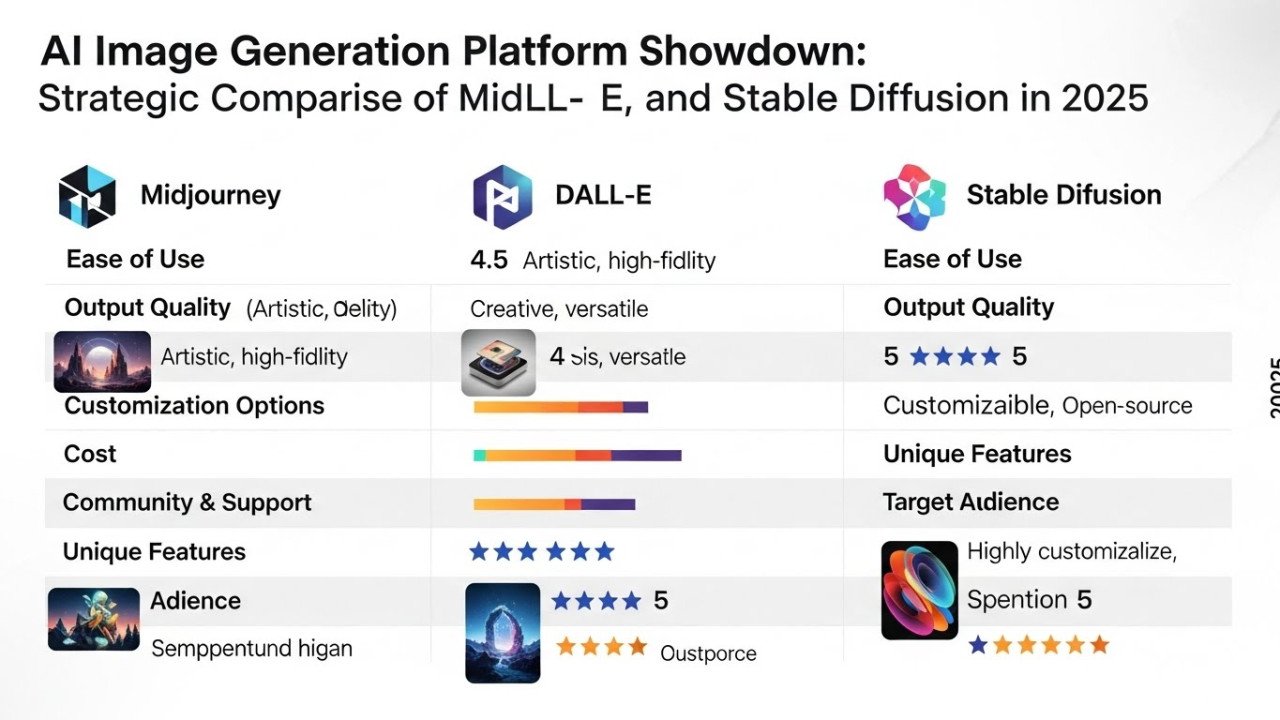
Generative Image Creation: DALL-E, Midjourney, Stable Diffusion excel at generating imagery from prompts. Primary use: concept exploration, mood boards, illustration generation, compositional ideation.
Design Automation: Figma's AI features, Adobe Sensei, and similar tools automate specific design tasks within existing platforms. Primary use: variant generation, layout assistance, asset scaling, style application.
Specialized Domain Tools: Uizard (sketch-to-UI), Runway ML (video design), Stocks Studio (product photography), and others optimize for specific design domains. Primary use: domain-specific acceleration.
Brand Consistency Platforms: Logo Diffusion, Brandfolder, Frontify, and comparable tools manage brand asset consistency at scale. Primary use: maintaining visual consistency across teams and applications.
Workflow Integration: GitHub Copilot for developer-designers, Cursor for design-adjacent development, and similar tools embed AI within existing workflows rather than requiring context-switching.
Sophisticated designers increasingly employ multiple tools sequentially—using generative AI for initial concepts, specialized tools for domain-specific work, automation platforms for production scaling, and consistency tools for brand governance.
Strategic Opportunities: Where Designers Create Competitive Advantage
Rather than competing with AI on speed or commodity generation, successful designers are repositioning around distinctly human value.
Strategic Creative Direction
The designer's role evolves from executional (creating specific visual solutions) toward strategic (determining what solutions matter and why). This repositioning creates defensible value as AI handles execution.
A strategic designer working with a brand doesn't ask "how do I design the logo?" Instead, they ask "what logo strategy best communicates this brand's competitive differentiation?" They might use AI to generate hundreds of exploration directions rapidly, but they apply strategic judgment determining which directions merit development. This strategic thinking—why these solutions rather than alternatives—remains distinctly human domain.
Specialized Domain Expertise
Designers with deep domain knowledge—understanding specific industries' constraints, regulatory requirements, user needs, and competitive dynamics—create value that generic AI cannot. A healthcare UX designer understanding HIPAA compliance requirements, user anxiety around medical interfaces, and accessibility necessities for aging populations applies expertise that AI systems trained on general design patterns cannot replicate.
Emotional Intelligence and Human Connection
Brands increasingly recognize that authentic emotional connection remains distinctly human. Design that feels genuine, that demonstrates understanding of target audiences' experiences and concerns, that communicates with emotional intelligence beyond surface aesthetics—these capabilities differentiate human designers.
This creates paradoxical opportunity. In an era where generic design becomes commodified (anyone can use AI to generate "acceptable" alternatives), design demonstrating authentic human understanding becomes premium commodity.
Art Direction and Creative Vision
Rather than creating designs directly, successful designers increasingly function as creative directors orchestrating AI, photographers, copywriters, and other specialists toward cohesive vision. This creative direction role—determining overall aesthetic direction, maintaining coherence across touchpoints, translating abstract strategic concepts into visual language—creates value that pure execution cannot.
Implementation Challenges: Honest Assessment of Real Barriers
Strategic adoption requires acknowledging genuine challenges beyond hype or nostalgia.
Copyright and Legal Ambiguity
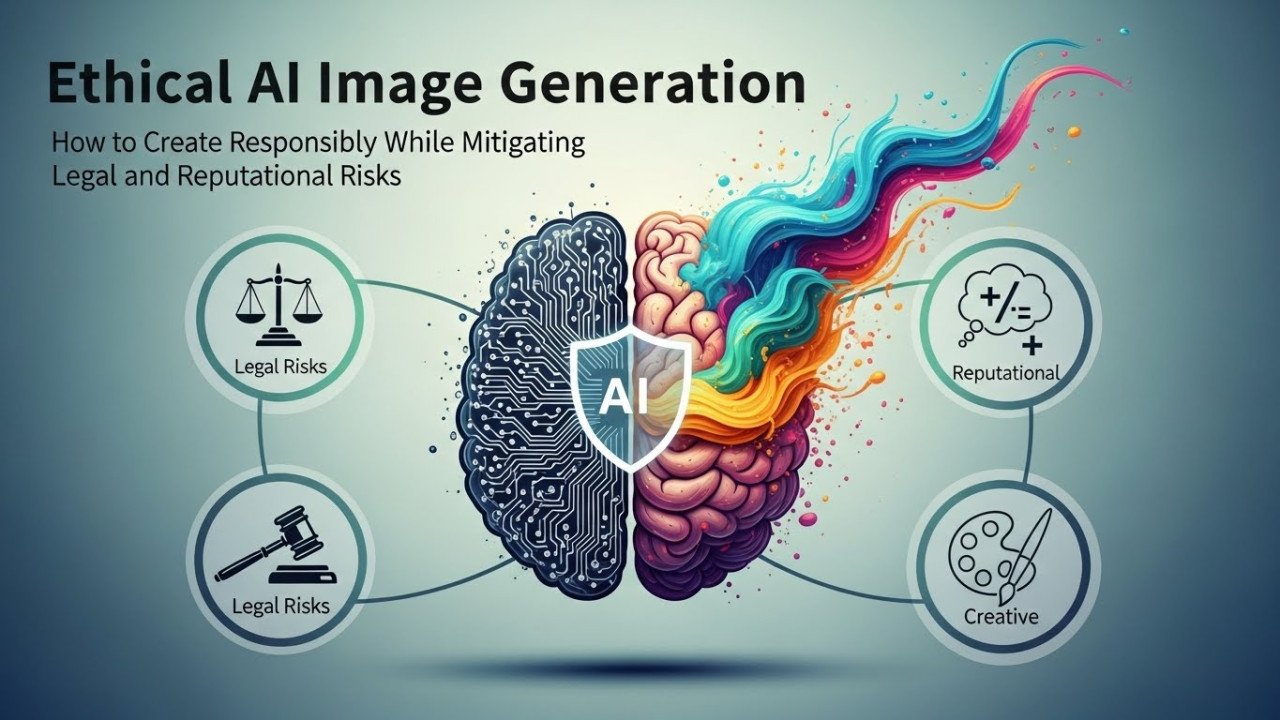
The copyright landscape for AI-generated content remains genuinely unsettled. Current U.S. copyright law holds that purely AI-generated content cannot be copyrighted (since copyright protection requires human authorship). This creates multiple challenges:
For Designers: If you generate a design entirely through AI without substantial human creative contribution, you may not own copyright to that design. Competitors could theoretically use the same AI tool with similar prompts to generate near-identical designs.
For Clients: Using AI-generated content trained on copyrighted works (all major AI systems were trained on copyrighted imagery) creates theoretical liability if generated output substantially resembles copyrighted originals. Recent lawsuits against Midjourney, Stability AI, and others challenge whether training on copyrighted works constitutes fair use.
Practical Impact: Most design clients require assurance that designs don't infringe existing copyrights. AI-generated content creates legal uncertainty that conservative clients (particularly enterprises and regulated industries) cannot accept.
Strategic Response: The most defensible approach involves using AI for ideation and exploration while ensuring final deliverables incorporate substantial human creative contribution, guaranteeing copyright protection and legal defensibility.
Brand Consistency Maintenance
While AI can apply styles, ensuring consistency across complex brand systems proves challenging. A designer might use AI to generate social media variations, only discovering that subtle inconsistencies exist—different color interpretation, slightly modified proportions, unexplained detail variations.
Successful brand management requires meticulous oversight, clear specification of consistency requirements, and often manual refinement. The efficiency gain from AI generation can be negated by time spent correcting inconsistencies.
Authenticity and Quality Variance
AI-generated imagery often exhibits characteristic visual patterns—slight plasticity, too-perfect lighting, generic expressions, subtle wrongness difficult to articulate but perceptible to sophisticated observers. For brand work where authenticity matters, these AI characteristics can undermine the design's effectiveness.
Successful designers increasingly use AI-generated elements as foundations for human refinement rather than final deliverables. An AI-generated image might serve as starting point for manual enhancement, combining speed advantage with authenticity assurance.
Client Perception and Value Communication
Clients accustomed to paying for designer time may struggle accepting that AI generated primary deliverables. If a designer generates excellent work in 30 minutes using AI rather than 8 hours of traditional work, should pricing reflect time spent or value delivered?
This creates pricing and value communication challenges. Designers accepting project pricing based on AI-accelerated timelines compress their economics. Those maintaining time-based pricing may seem expensive for work clients discover was AI-generated. Those positioning around strategic value and oversight rather than execution time can maintain pricing power.
The Reskilling Imperative: Essential Designer Capabilities in AI Era
Rather than eliminating designers, AI adoption creates new skill requirements that successful designers are developing.
Creative Direction and Strategic Thinking
With execution delegated to AI, designers increasingly need strategic capability. Understanding business objectives, competitive positioning, target audience psychology, and translating strategic concepts into visual language becomes primary value. Designers who can think strategically about why specific solutions work (beyond "I like this aesthetic") become essential collaborators.
AI Tool Mastery and Workflow Design
Rather than becoming less technical, successful designers increasingly master complex workflows combining multiple AI tools. Understanding which tools excel at specific tasks, how to sequence tools for optimal results, and how to specify requirements that AI systems can reliably execute becomes core competency.
This represents subtle shift. Designers don't need to understand AI architecture or train models. They do need sophisticated understanding of tool capabilities, limitations, and optimal application sequencing.
Ethical Judgment and Responsible Implementation
As AI capabilities expand, ethical decision-making becomes increasingly important. Determining responsible AI use, identifying when AI-generated content is appropriate versus problematic, understanding representation and bias implications, and communicating transparently about AI use become essential capabilities.
Specialized Domain Expertise
Rather than generalist capability, successful designers increasingly develop deep expertise in specific domains. A designer who understands healthcare, financial services, education, or other specialized fields creates value that generic AI cannot replicate.
Business Model Evolution: How Design Economics Are Changing
Beyond skills, design business models are fundamentally evolving.
From Time-Based to Value-Based Pricing
Time-based billing becomes problematic when clients discover work was AI-generated and completed in hours rather than days. Successful designers increasingly shift toward value-based pricing—charging based on business impact and strategic contribution rather than time invested.
This requires repositioning from "I spent X hours therefore charge Y" toward "this solution drives Z business value therefore charge W."
From Execution to Strategic Partnership
Rather than project-based client relationships, successful designers increasingly position as strategic partners, conducting quarterly reviews, identifying emerging design opportunities, and maintaining ongoing engagement. This recurring relationship model proves more resilient than project-based work that can be commodified through AI.
From Solo Practitioners to Orchestrators
Instead of individually executing all design work, successful designers increasingly orchestrate teams combining AI tools, specialized contractors, and strategic guidance. The designer becomes director coordinating diverse capabilities rather than sole creator.
Adoption Timeline and Market Reality
Rather than speculative prediction, examining actual adoption patterns reveals realistic trajectory.
2025-2026: AI tools become standard workflow components, replacing tedious production work. Designers who adopt strategically maintain productivity advantages. Design roles increasingly differentiate between strategic/creative and execution levels.
2027-2029: AI-driven commodity design reaches quality threshold where clients distinguish it minimally from professional work. Significant commoditization of execution-focused design emerges. Strategic design positioning becomes necessary for premium positioning.
2030+: Design separates into distinct tiers. Commodity design increasingly automated (similar to how stock photography commoditized photography). Premium design emphasizing human creativity, emotional connection, and strategic thinking becomes exclusive domain. Middle-tier professional design faces compression.
This timeline resembles previous technology disruptions. Photography didn't disappear when it was invented; instead, it democratized, created new domains while displacing others, and forced photographers to reposition around distinctive value.
Frequently Asked Questions: Practical Designer Considerations
Should I use AI tools or will they make me obsolete?
Strategic AI use creates competitive advantage. Ignoring AI creates obsolescence risk. The question isn't "should I use AI?" but "how should I use AI strategically?"
What AI tools should designers learn?
Start with your existing tool ecosystem. If you use Adobe Creative Cloud, learn Adobe Sensei. If you use Figma, learn its AI features. Then explore domain-specific tools matching your specialization. Generalist knowledge of major platforms (DALL-E, Midjourney, Stable Diffusion) proves valuable for understanding capabilities, though specialized domain tools matter more for your specific work.
Can I charge professional rates for AI-generated work?
Yes, if that work includes strategic thinking, creative direction, refinement, and oversight. No, if it's purely AI-generated with minimal human contribution. The distinction is strategic value versus commodity output.
Should I disclose AI use to clients?
Generally yes. Transparency builds trust. Clients increasingly expect AI disclosure. Rather than hiding AI use, position it as strategic tool you employ on their behalf for efficiency and capability enhancement.
Will AI eliminate design jobs?
Not entirely. It will commodify some design work while creating demand for specialized and strategic design. Career risk concentrates among designers competing primarily on speed/cost; opportunity concentrates among designers offering strategic value and specialized expertise.
How do I maintain brand consistency with AI-generated assets?
Establish clear style specifications, use consistent seeds/parameters, implement rigorous quality review, and often maintain some manual refinement. Consistency requires human oversight; automation alone proves insufficient.
What skills should I develop to remain competitive?
Strategic thinking, domain expertise, ethical judgment, AI tool mastery, and human connection/emotional intelligence. These capabilities remain distinctly human domain.
Is AI copyright-generated content safe to use commercially?
Legally uncertain. For maximum safety, ensure substantial human creative contribution, screen for similarity to existing copyrighted works, and obtain appropriate licensing/insurance. Conservative clients may require human-created alternatives despite legal gray areas.
How do I position my services in AI era?
Emphasize strategic contribution, specialized expertise, human creativity, and authentic connection rather than execution speed. Position as creative director/strategic partner rather than executor.
Will my rates decrease due to AI?
Rates for commodity execution work will decrease. Rates for strategic and specialized work will increase. Career success depends on repositioning toward strategic value.



Comments (0)
No comments found