


Future of Search 2025: Mastering Generative Engine Optimization (GEO) & Digital Discovery
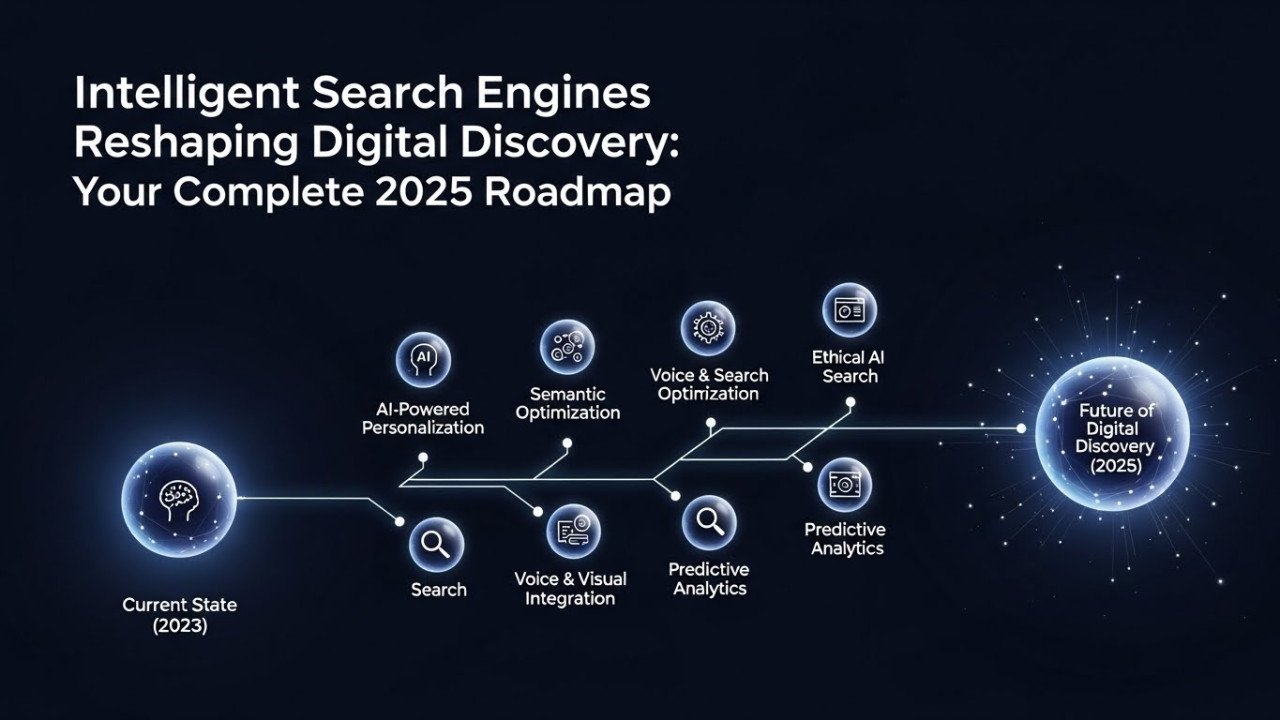
Intelligent Search Engines Reshaping Digital Discovery: Your Complete 2025 Roadmap
The landscape of online search has undergone a seismic transformation. Gone are the days when search meant typing a few keywords and scrolling through ranked web pages. In 2025, artificial intelligence has fundamentally reimagined how billions of people discover information. Rather than simply matching keywords to indexed pages, modern search engines now comprehend intent, context, and nuance—delivering precisely what users actually need before they even fully articulate their questions.
This shift represents far more than an incremental upgrade. It's a complete departure from traditional search paradigms, powered by breakthroughs in natural language processing, machine learning algorithms, and large language models that understand human communication in surprisingly sophisticated ways. For anyone serious about efficient research, business intelligence, or staying informed in an increasingly complex digital world, understanding these new search capabilities has become essential.
This comprehensive guide explores the most impactful AI-powered search platforms entering 2025, examining what makes each one distinctive, and providing practical guidance on selecting the right tool for your specific needs.
The Evolution: How AI Fundamentally Changed Search
Traditional search engines operated like highly sophisticated filing systems. They'd match user keywords against billions of indexed pages, rank them by relevance factors like links and keyword density, and present results in order. The burden of synthesizing information fell entirely on the user—click through pages, compare sources, extract answers.
Contemporary AI search engines operate on entirely different principles. They employ neural networks trained on vast text corpora to understand semantic relationships between concepts. When someone searches for "affordable Mediterranean destinations in winter," an AI engine grasps not just the individual keywords, but the underlying user intent: a person seeking budget-conscious travel recommendations for specific climates and seasons.
This comprehension gap created what researchers call the "context revolution." Instead of forcing users to become researchers, modern engines become research assistants. They aggregate information from multiple sources, synthesize contradictions, identify patterns, and present synthesized answers in natural language. The user still gets links to source material, but the engine has already performed preliminary analysis.
This transformation emerged from three technological enablers working in concert: massive computational power allowing real-time neural network operations, transformer architectures that revolutionized language understanding, and vast training datasets allowing engines to learn patterns across human knowledge.
Understanding Core AI Search Capabilities
Before exploring specific platforms, understanding the technological capabilities underpinning them illuminates why they work so differently than traditional alternatives.
Natural Language Processing (NLP) represents the foundational layer. It enables engines to recognize that "How can I improve my photography?" and "What techniques enhance photo quality?" represent essentially the same query despite different wording. This capability eliminates the frustration where slightly different search phrasing yields entirely different results.
Machine Learning algorithms continuously refine search accuracy based on user interactions. When millions of users search for something and subsequently click specific results while ignoring others, these systems learn which results actually satisfy user intent. Over time, they recognize patterns about what truly matters to real people searching for information.
Conversational AI creates a fundamentally different user experience. Instead of a single query-and-results exchange, users can iteratively refine their information gathering. "Tell me more about the second point." "How does this compare to the alternative?" "What would skeptics say about this?" The search becomes a dialogue rather than a transaction.
Multimodal understanding represents the cutting edge. Rather than treating text, images, video, and audio as separate modalities, advanced systems integrate them. Users can search via image, voice, text, or combinations, with the system understanding intent across all formats.
Real-time knowledge integration distinguishes current-generation systems from earlier AI implementations. Rather than relying exclusively on training data frozen at a cutoff date, modern engines can access live information streams, enabling them to answer questions about events happening today, current prices, breaking news, and emerging trends.
These capabilities combine to create search experiences that feel less like querying a database and more like consulting a knowledgeable expert.
Essential Criteria for Evaluating AI Search Engines
The proliferation of AI search platforms means users face genuine choices. Rather than defaulting to whichever tool exists on their phone, thoughtful selection based on your actual needs maximizes value. Several key criteria deserve consideration.
Search Quality and Accuracy represents the primary concern. Does the engine consistently provide relevant, factual information? Do the synthesized answers align with what you find through manual research? Do sources support claimed information? Some engines excel with certain query types while struggling with others.
Privacy and Data Protection have become increasingly important as surveillance concerns mount. Does the engine track search history? Does it sell data to advertisers? Does it implement encryption? Some users happily trade privacy for feature richness; others consider it non-negotiable.
Speed and Responsiveness matter more than users often consider. Waiting 30 seconds for a response that you could read in 10 seconds negates the efficiency advantages. Response quality becomes irrelevant if users abandon the tool due to sluggishness.
Source Transparency indicates whether the engine reveals which sources it consulted when generating responses. This capability allows users to verify claims independently and assess source credibility themselves.
Customization Options determine whether the tool adapts to your workflow or forces you to work around its limitations. Can you adjust result depth? Save searches? Create custom filters?
Integration Capabilities recognize that search doesn't exist in isolation. Does the tool integrate with browsers? Email clients? Productivity applications? The best search engine for isolated queries might prove frustrating if it doesn't integrate with your existing workflow.
Cost Structure obviously influences accessibility. Free options with limitations exist alongside premium services offering expanded functionality. Your usage volume and willingness to pay should guide selection.
The Leading Intelligent Search Platforms in 2025
ChatGPT Search: Conversational Intelligence at Scale
OpenAI's ChatGPT represents perhaps the most recognizable AI search platform globally. The latest iteration introduced search functionality integrating real-time web access with the conversational interface users already know.
ChatGPT Search excels with complex, multifaceted queries requiring synthesis across numerous sources. The engine understands follow-up questions and context, enabling iterative information discovery. Ask about the best budget airlines to Europe, then ask for specific route recommendations, then request price trend analysis—the engine maintains context throughout.
The interface feels remarkably natural. Rather than abstract search results, responses arrive as clear explanations in conversational language. Complex topics become approachable because ChatGPT structures explanations pedagogically, building understanding progressively rather than dumping information.
Strengths include exceptional language understanding, integration with GPT-4's reasoning capabilities, and rapid feature development. Limitations include occasional hallucinations where the engine confidently provides incorrect information, inconsistent source revelation, and premium pricing for the most capable versions.
ChatGPT Search works ideally for exploratory research, brainstorming, creative projects, and situations where understanding reasoning matters more than raw speed.
Perplexity AI: Speed Meets Precision
If ChatGPT represents conversational comprehensiveness, Perplexity AI emphasizes velocity and clarity. Searches return remarkably quickly, with synthesized answers typically appearing within seconds.
The platform distinguishes itself through explicit source citation. When Perplexity generates answers, it clearly identifies which sources informed specific claims, allowing readers to verify information independently. This transparency builds confidence in results, particularly for important decisions.
Perplexity also introduced "copilot mode," enabling guided research where the AI suggests relevant follow-up questions, helping users think through topics more thoroughly than they might independently.
The tool handles general knowledge queries, news research, factual lookups, and current event analysis beautifully. It proves less suitable for highly creative or conceptual tasks where conversational depth matters more than speed.
Strengths include fast responses, transparent sourcing, clean interface, and effective mobile experience. Limitations include sometimes generic answers, occasional oversimplification of nuanced topics, and variable premium features across subscriptions.
Google's Generative Search Experience: Dominant But Evolving
Google maintains its market dominance while introducing increasingly sophisticated AI capabilities. The Search Generative Experience (SGE) now appears on approximately 87% of all queries, fundamentally transforming the interface for billions of users.
Rather than displacing traditional search results, SGE supplements them with AI-generated "overviews" at the top of results pages. These overviews synthesize information from multiple sources, providing quick answers that address user intent directly. For straightforward factual queries, many users never need to click beyond these overviews.
Google's advantage stems from its unprecedented index scale and real-time information integration. Questions about local businesses, recent events, or niche topics often yield better results from Google simply because its index includes information others miss.
The company also introduced "AI Mode," a conversational layer enabling turn-based dialogues with multi-step reasoning. This represents Google's response to conversational search competitors.
Strengths include unmatched scale, real-time information integration, integration with Google's ecosystem, and continuous improvement. Limitations include occasional bias toward Google properties, privacy concerns, and sometimes opaque algorithmic decision-making.
Microsoft Copilot: Enterprise Focus
Microsoft's Copilot evolved from Bing AI to become increasingly sophisticated. The platform emphasizes enterprise integration, working seamlessly with Microsoft 365 applications, Outlook, and other business tools.
Copilot particularly excels with complex research synthesis, leveraging its access to both web content and enterprise-specific information. Organizations have begun deploying Copilot internally for knowledge management, employee research assistance, and decision support.
The interface balances power with accessibility. Advanced capabilities exist for sophisticated users while remaining intuitive for casual users. This design philosophy reflects Microsoft's enterprise positioning.
Strengths include business integration, real-time web access, and sophisticated reasoning. Limitations include less name recognition than competitors, variable performance on specialized queries, and pricing that assumes organizational deployment rather than individual use.
You.com: Privacy-First Intelligence
You.com deliberately positions itself as the privacy alternative. While maintaining AI search sophistication comparable to premium competitors, You.com commits to zero tracking, no advertisement targeting, and transparent privacy policies.
The platform offers different modes optimized for different purposes: research mode emphasizes sourcing and depth, writing mode assists creative projects, and develop mode targets technical queries. This flexibility allows the tool to adapt to varied user needs.
For privacy-conscious users or those uncomfortable with surveillance capitalism, You.com represents a viable alternative that doesn't sacrifice capability for principles. Research shows privacy-focused individuals increasingly prioritize ethical search platforms, and You.com has captured significant market share in this segment.
Strengths include genuine privacy protection, mode-based specialization, and competitive search quality. Limitations include smaller index than Google, less brand recognition, and fewer advanced features than premium competitors.
Kagi: Premium Intelligence
Kagi introduced a subscription model challenging the advertising-supported paradigm. Rather than monetizing user data or imposing advertisements, Kagi charges directly for access, aligning incentives between company and user.
Premium pricing ($10-25 monthly depending on plan) enables the company to optimize exclusively for search quality rather than ad revenue. The results deliver noticeably refined search experiences compared to advertising-supported alternatives.
Customization represents a Kagi strength. Users can establish custom filters, prioritize preferred sources, demote others, set preferred languages, and create saved searches. This level of control allows sophisticated researchers to optimize the tool for their specific workflow.
The platform's "quick answer" feature, powered by advanced AI models, delivers direct responses for factual queries without forcing users through result lists.
Strengths include exceptional customization, quality-first orientation, fast performance, and principled business model. Limitations include cost, smaller user base limiting community contributions, and less developed features compared to larger competitors.
Brave Leo: Embedded Intelligence
Brave, known for privacy-focused browsing, integrated AI search directly into its browser as Brave Leo. Rather than visiting a separate search application, users access AI assistance while already using their browser.
This embedded approach eliminates friction. Users don't toggle between applications; they access help directly within their browsing context. This integration dramatically increases usage since it's always accessible.
Brave Leo works particularly well for research while reading articles, quickly looking up facts to verify claims, or exploring tangential information without leaving the current page.
Strengths include seamless integration, privacy by default, and reduced friction. Limitations include less powerful than dedicated search engines, limited to browser context, and fewer advanced features.
DeepSeek: Technical Depth
DeepSeek emerged as an open-source alternative emphasizing transparency and technical capability. The engine particularly excels with programming queries, technical research, and specialized knowledge domains.
DeepSeek's commitment to openness appeals to developers, researchers, and organizations prioritizing transparency in AI systems. Unlike proprietary engines where algorithms remain opaque, DeepSeek's open-source nature allows technical users to understand how results are generated.
For general users, DeepSeek offers less advantage than competitors, but technical audiences recognize its value for specialized queries.
Strengths include open-source transparency, exceptional technical search quality, and free access. Limitations include narrower general knowledge base, less consumer-friendly interface, and smaller index than mainstream competitors.
Emerging Platforms Worth Monitoring
Beyond the established leaders, several emerging platforms deserve attention.
Exa AI specializes in semantic search, trained on scientific and academic content. Researchers and knowledge workers find exceptional value in its ability to locate relevant papers, studies, and technical resources.
Andi Search combines chatbot and search functionality in a distinctive interface emphasizing conversation over traditional search result lists. The young platform continues evolving but shows promise for specific use cases.
Komo AI differentiates through trend tracking and social media intelligence. Rather than comprehensive general search, Komo excels at identifying emerging topics, tracking discussions, and understanding how information circulates socially.
Phind targets developers specifically, optimizing for programming queries, documentation, and technical problem-solving. The specialized focus delivers superior results for its target audience despite lower general search capability.
Practical Selection Framework
Rather than universally recommending specific platforms, thoughtful selection depends on your actual use case. Consider these scenarios:
For General Research and Information Discovery: ChatGPT Search and Perplexity AI represent excellent choices, with selection depending on whether you prioritize conversational depth (ChatGPT) or speed and transparency (Perplexity).
For Privacy-Conscious Users: You.com and Brave Leo offer capable alternatives aligned with privacy principles, trading some feature richness for ethical operation.
For Technical Queries: DeepSeek and Phind deliver superior results within their specialized domains.
For Business Intelligence: Microsoft Copilot's enterprise integration and contextual capabilities justify consideration for organizational deployment.
For Power Users: Kagi's customization and quality-first orientation appeal to sophisticated users willing to invest in optimal configuration.
For Quick Lookups: Google's generative interface remains unmatched for rapid factual verification, particularly involving local information or recent events.
Looking Forward: The Trajectory of AI Search
The trajectory suggests continued convergence toward multimodal, personalized, predictive search experiences. Rather than users formulating explicit queries, future systems may anticipate information needs based on context and behavior.
Integration with everyday tools—CRMs, email, project management systems—will eliminate the discrete "search application" metaphor, embedding intelligence throughout users' digital environments.
Simultaneously, ethical frameworks addressing transparency, bias, and data protection will likely influence platform differentiation. As users increasingly recognize the implications of surveillance-based business models, privacy-preserving alternatives may capture expanding market share despite lacking massive resources.
The most successful platforms will likely balance capability with ethics, speed with accuracy, power for advanced users with simplicity for casual ones. The best choice depends less on abstract superiority than on alignment with your specific values, needs, and workflow.
Frequently Asked Questions About AI Search Engines
How do AI search engines differ from traditional search engines?
AI search engines comprehend user intent and context rather than simply matching keywords. They synthesize information from multiple sources into coherent answers, update results in real-time, understand natural language variations, and support conversational interactions. This creates fundamentally different user experiences than traditional ranked link lists.
Is ChatGPT the only option for conversational search?
No. While ChatGPT popularized conversational search, Perplexity AI, You.com, and increasingly Bing/Copilot offer sophisticated conversational capabilities. Each emphasizes different strengths—ChatGPT prioritizes reasoning depth, Perplexity emphasizes speed, You.com prioritizes privacy.
Do all AI search engines have privacy concerns?
Most free alternatives monetize through advertising or data sales, creating privacy-relevant business models. Premium or subscription alternatives like Kagi and privacy-focused options like You.com offer stronger privacy protection through business models aligned with user interests rather than advertisers.
Which AI search engine handles current events best?
Google maintains advantages for recent information due to its real-time index and scale. Perplexity AI and Microsoft Copilot also perform well with current information. Specialized platforms like Komo AI excel specifically with trending topics and social discussions.
Can I use multiple AI search engines simultaneously?
Absolutely. Many sophisticated users employ different engines for different purposes—using Google for immediate facts, Perplexity for research synthesis, ChatGPT for complex reasoning, and specialized tools like DeepSeek for technical queries. This portfolio approach leverages each platform's strengths.
How do I evaluate search quality for my specific needs?
Run test queries across multiple platforms capturing your typical research patterns. Compare result accuracy, source transparency, response speed, and interface intuitiveness. Most platforms offer free trials or free tiers enabling evaluation before commitment.
Are AI search engines replacing traditional search?
Not completely. They represent additions rather than replacements, with different strengths and best use cases. Traditional search remains valuable for exhaustive exploration; AI search excels for specific answers. Optimal information discovery often combines both approaches.





Comments (0)
No comments found