


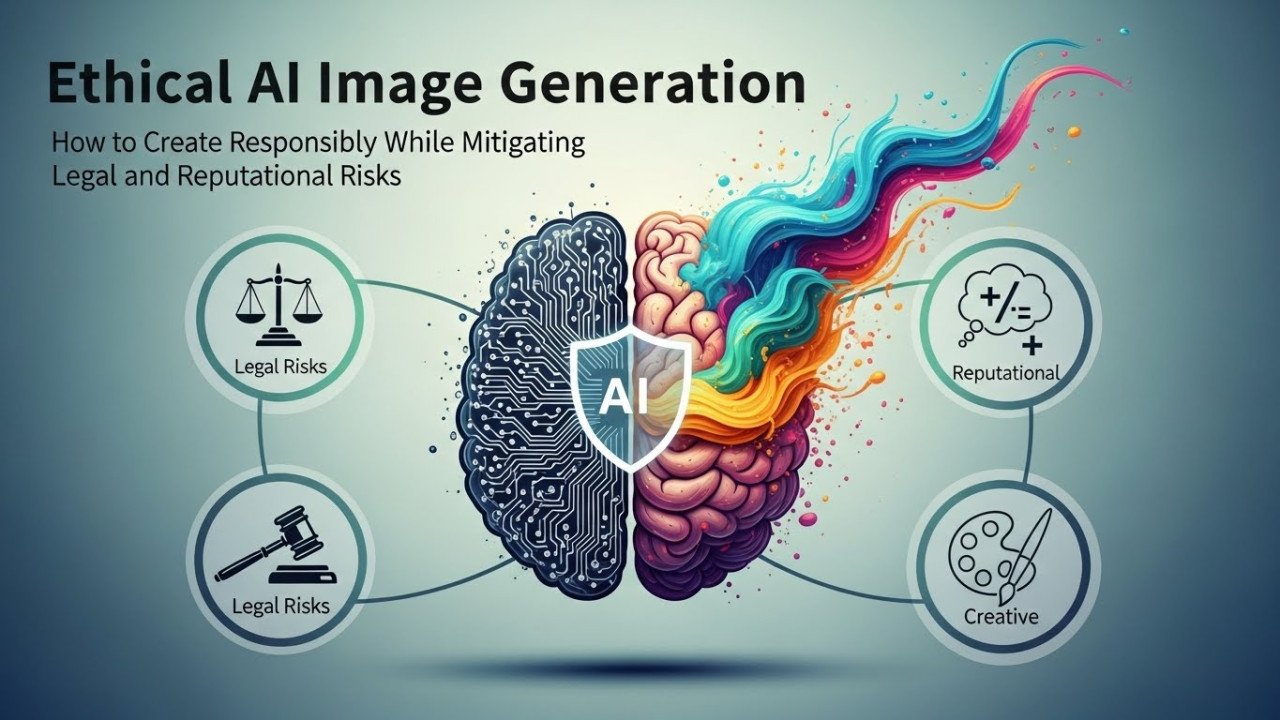
Ethical AI Image Generation: How to Create Responsibly While Mitigating Legal and Reputational Risks
The Ethics of AI Images
AI image generation raises ethical questions: Do generated images perpetuate bias? Is it deceptive to pass AI images as authentic? Do we have responsibilities to represented groups?
By 2026, consumer awareness of AI ethics had heightened. Brands that generate responsibly build trust; those cutting corners face backlash. This guide provides a practical ethical framework for responsible AI image generation.
Understanding AI Image Ethics
Key Ethical Concerns
1. Bias Representation
- Problem: AI models trained on internet data, which reflects real-world biases. Generated images may perpetuate stereotypes.
- Example: Prompt "professional doctor" may generate predominantly male images (historical bias in training data).
- Risk: Brand appears discriminatory, consumer backlash, media criticism.
2. Diversity and Inclusion
- Problem: Default AI generations may lack diversity (over-representation of certain demographics).
- Example: "Beautiful model" may generate predominantly light-skinned representation.
- Risk: Excludes audiences, appears non-inclusive, and alienates consumers.
3. Deception and Authenticity
- Problem: Passing AI images as authentic photography is deceptive.
- Example: Marketing campaign showing "real people" when images are AI-generated.
- Risk: Consumer trust violation, FTC scrutiny, brand damage.
4. Misrepresentation
- Problem: AI can generate unrealistic product representations (product appears better than reality).
- Example: Clothing AI image showing a perfect fit that the actual product doesn't match.
- Risk: Returns, complaints, regulatory action.
5. Cultural Sensitivity
- Problem: AI may generate images offensive or insensitive to cultural groups.
- Example: Generating religious imagery inappropriately, sacred symbols are disrespected.
- Risk: Offended communities, social media backlash, and boycotts.
Framework for Ethical AI Image Generation
Principle 1: Transparency
Requirement: Disclose AI-generated images clearly when appropriate
Best practice: Label AI-generated images (at least in small print: "Image created with AI")
When required:
- Marketing campaigns (implied authenticity → disclosure necessary)
- Social media posts (transparency builds trust)
- Advertising (FTC guidance recommends disclosure)
When optional:
- Internal creative mockups
- Clearly stylised/artistic content (obviously not real)
- Entertainment, gaming context
Implementation: Add footer "AI-generated image" or credit "Created with DALL-E" or "AI-assisted imagery."
Principle 2: Bias Awareness
Requirement: Actively mitigate bias in generated images
Actions:
Step 1: Explicit Diversity Prompting
"Professional diverse team of doctors, including men and women, multiple ethnicities and ages, hospital setting"
Step 2: Review Outputs for Representation
- Generate 10 images
- Count demographic representation (gender, ethnicity, age)
- Reject homogeneous sets, regenerate with diversity prompting
Step 3: Include Underrepresented Groups Intentionally
- For corporate imagery: ensure LGBTQ+ representation
- For diverse workforce images: include people with disabilities
- For beauty/fashion: include various body types, skin tones, ages
Measurement: Track diversity metrics (% women, % non-white representation, age range) in generated batches
Principle 3: Accuracy and Authenticity
Requirement: Don't misrepresent products or people through AI
Guidelines:
For product images:
- AI product must match the actual product dimensions, fit, and quality
- Colors must reflect reality (if the actual product is burgundy, AI must show burgundy, not a lighter shade)
- Avoid showing capabilities not present in the real product
For lifestyle images:
- Don't show unrealistic product usage
- Don't imply AI-generated models are real people
- Don't use AI images to misrepresent brand values or commitments
Example misrepresentation:
AI shows a luxury clothing item perfectly fitted on a model. The actual item has sizing issues. Consumer buys, receives ill-fitting product, initiates return. Result: customer dissatisfaction, negative reviews, and regulatory scrutiny.
Principle 4: Cultural Sensitivity
Requirement: Respect cultural contexts and avoid offensive imagery
Guidelines:
- Avoid sacred imagery (religious symbols, sacred places) unless explicitly appropriate
- Research the cultural context before generating (e.g., colors have different meanings in different cultures)
- Include cultural representation thoughtfully, not stereotypically
- Get cultural review for global campaigns (diverse eyes check for sensitivity)
Example cultural sensitivity failure:
Tech company generates "celebration" imagery, including sacred Hindu symbols,s inappropriately. The Hindu community is offended. Social media backlash. The company was forced to apologise and withdraw the campaign.
Principle 5: Informed Consent
Requirement: If generating images resembling real people, obtain consent
Guidelines:
- Don't generate images of real celebrities without consent (potentially right-of-publicity violation)
- If generating "realistic people," use generic AI-generated faces (not resembling specific individuals)
- If using real people in images, get written permission
Practical Ethical Checklist
Before Publishing AI-Generated Images
- ☑ Transparency: Labelled as AI-generated (if required by context)
- ☑ Diversity check: Review image for demographic representation
- ☑ Accuracy verification: Product/person accurately represented
- ☑ Cultural review: No offensive imagery, cultural sensitivity verified
- ☑ Consent check: Real people's rights protected (no non-consensual realistic depictions)
- ☑ Bias audit: Image doesn't perpetuate stereotypes
- ☑ Quality standard: Image meets professional standards (not misleading through poor quality)
- ☑ Brand alignment: Reflects company values and commitments
Common Ethical Violations and Mitigations
Violation #1: Non-Disclosure of AI Generation
Problem: Marketing campaign shows "real people" that are AI-generated without disclosure
Risk: FTC action (false advertising), consumer trust damage, media criticism
Mitigation: Clearly label "AI-generated imagery" in campaign materials or fine print
Violation #2: Perpetuating Bias
Problem: "Professional workforce" images show predominantly one gender/ethnicity
Risk: Perceived discrimination, consumer backlash, employee concerns
Mitigation: Explicitly prompt for diversity, review outputs, and regenerate if homogeneous
Violation #3: Misrepresenting Product Quality
Problem: AI product image shows unrealistic perfection (actual product has quality issues)
Risk: Returns, complaints, FTC scrutiny, brand reputation damage
Mitigation: Compare the AI image to actual product samples. Ensure accuracy in appearance.
Violation #4: Cultural Insensitivity
Problem: The Global campaign uses sacred imagery inappropriately
Risk: Offended communities, boycotts, brand damage
Mitigation: Research the cultural context. Get a review from diverse team members. Avoid sacred/sensitive imagery.
Violation #5: Undisclosed Celebrity Likenesses
Problem: Using AI-generated faces that closely resemble real celebrities without consent
Risk: Right-of-publicity lawsuit, cease-and-desist letters
Mitigation: Avoid generating celebrity likenesses. Use clearly AI-generated generic faces. If celebrity appearance is essential, obtain consent/licensing.
Diversity in AI-Generated Images: Best Practices
How to Generate Diverse Representations
Technique 1: Explicit Demographic Prompting
INCLUSIVE: "diverse team including men and women, various ethnicities, different ages (20s to 60s), different body types, varying physical abilities, LGBTQ+ representation" VS PROBLEMATIC: "team of people" (will default to homogeneous)
Technique 2: Multiple Generation Cycles
- Generate Batch A: explicit diversity prompting
- Generate Batch B: with variation in prompts (different ethnicities, genders explicitly stated)
- Review combined batches for diversity representation
Technique 3: Sampling and Replacement
- Generate images normally
- Review for diversity
- If underrepresented groups are missing, regenerate specifically for those demographics
- Combine batches to create a diverse final set
Diversity Measurement
Track by demographic category:
- Gender: % male, % female, % non-binary representation
- Ethnicity: % white, % Black, % Asian, % Hispanic, % other
- Age: % under 30, % 30-50, % over 50
- Ability: % with visible disabilities represented
- LGBTQ+: % indicating LGBTQ+ representation (if appropriate to context)
Target: Match general population demographics (roughly 50% women, ethnic diversity reflecting the region)
Transparency Guidelines by Context
When to Disclose AI Generation
| Context | Disclosure Required? | Example |
|---|---|---|
| Marketing/Advertising | YES | "AI-generated image" in fine print or caption |
| Product photography | YES | Ecommerce product images should disclose |
| Editorial/News | YES | Media outlet publishing AI images requires disclosure |
| Social media posts | RECOMMENDED | Disclose in caption for transparency |
| Artistic/creative | OPTIONAL | Obviously stylized art; disclosure less critical |
| Internal mockups | NO | Not public-facing; disclosure unnecessary |
Real-World Ethical Case Studies
Case Study #1: Luxury Brand Diversity Success
Company: High-end fashion brand
Challenge: Generate diverse workforce imagery for the company website
Ethical approach:
- Explicit diversity prompting (various ethnicities, genders, ages, abilities)
- Generated 100 images with deliberate diversity
- Measured: 45% women, 15% LGBTQ+ representation, 8% visible disabilities, diverse ethnicities
- Disclosed: Small "AI-generated diversity imagery" credit
Result: Positive reception. Consumer feedback praised inclusive imagery. No backlash. Brand perception improved.
Case Study #2: Tech Company Cultural Sensitivity Failure
Company: Software company
Failure: Generated "celebration" images using sacred Hindu symbols without cultural review
Result:
- Hindu community offended (social media outcry)
- Major media criticism ("Tech brand disrespects Hindu culture")
- The company forced an apology and campaign withdrawal
- Brand reputation damage (estimated 6-month recovery)
Lesson: Always get cultural review for global campaigns. Sacred/sensitive imagery requires extreme care.
Case Study #3: E-commerce Product Accuracy Violation
Company: Fashion retailer
Failure: AI product images showed clothing in an incorrect fit; the actual product had sizing issues
Result:
- High return rate (customers received a different fit)
- Negative reviews ("photos misleading")
- FTC complaint filed ("false advertising through AI images")
- The company revised images to show a realistic fit
Lesson: AI product images must match reality. Perfection is deceptive.
Frameworks and Standards Emerging 2026
EU AI Act Requirements
Coming 2026-2027: Mandatory disclosure of AI-generated content in the EU
Implication: Brands operating in the EU must label all AI images ("This image was created with AI")
FTC Guidance on AI Authenticity
Current (2026): FTC warns against deceptive AI image use. Not yet law, but enforcement is likely.
Implication: Proactive disclosure recommended (avoid regulatory action)
Industry Standards (IAB, Ad Council)
Emerging 2026: Industry associations developing AI image ethics guidelines
Implication: Follow industry best practices to stay ahead of regulation
FAQs
Q1: Do I Legally Have to Disclose AI Images?
A: Not yet in the US (2026). The EU is likely to require it by 2027. Best practice: disclose proactively.
Q2: How Do I Ensure Diversity in AI Images?
A: Explicit prompting, multiple generation batches, measurement/tracking, and regeneration if underrepresented groups are missing.
Q3: Is It Unethical to Use AI Product Photos?
A: No, with caveats: images must accurately represent the product, disclose if marketing as "authentic," and avoid misleading quality.
Q4: Can I Generate Images of Real People?
A: Risky. Avoid celebrity likenesses (legal issues). For realistic people: use AI-generated generic faces or obtain consent.
Q5: What's the Risk of Bias in AI Images?
A: Reputational damage, consumer backlash, and brand perception of discrimination. Mitigated through explicit diversity prompting and review.
Q6: How Do I Know If My AI Image Is Culturally Sensitive?
A: Get a review from diverse team members (different cultural backgrounds). Research context before generating. Err on the side of caution with sacred/sensitive imagery.
Q7: Should Small Businesses Worry About AI Ethics?
A: Yes. Ethical practices build trust, avoid backlash. Doesn't require elaborate processes—just thoughtfulness and basic guidelines.
Related Articles for ImageCreatAI
- AI Photography Revolution 2026: Strategic Adaptation & Market Survival Guide
- AI Image Generation Mastery 2025: Expert Strategies for Studio-Quality Results
- AI Image Generation for Designers 2026: Strategic Implementation & Competitive Advantage
- DALL-E 3 vs Midjourney vs Flux Tested: Which AI Generator Actually Delivers for Marketing Teams
- Copyright and Legal Risks in AI Image Generation: What Businesses Need to Know Before Using AI Art
- Image Generation for Ecommerce: Complete Workflow From Product Photos to Scale (With Real ROI Data)
- Prompt Engineering Mastery: How Professional Designers Get Photorealistic AI Images Consistently
- Building AI Image Templates That Maintain Brand Consistency: A Professional Production Framework
Final Verdict
Ethical AI image generation is not just a moral imperative—business strategy. Consumers increasingly expect ethical brand practices. Companies that generate responsibly build trust and loyalty; those cutting corners face backlash.
Core practices: transparency (disclose AI), diversity (deliberate inclusion), accuracy (match reality), cultural sensitivity (thoughtful representation), informed consent (respect privacy).
Implementation straightforward: diverse prompting, output review, team discussion, and disclosure labelling. Cost minimal (adds 1-2 hours per batch). ROI is high (brand trust, avoided backlash, consumer loyalty).
By 2027, ethical AI image generation will likely regulatory requirement (EU) and an industry standard. Start implementing now to get ahead of compliance and build consumer trust.




Comments (0)
No comments found